
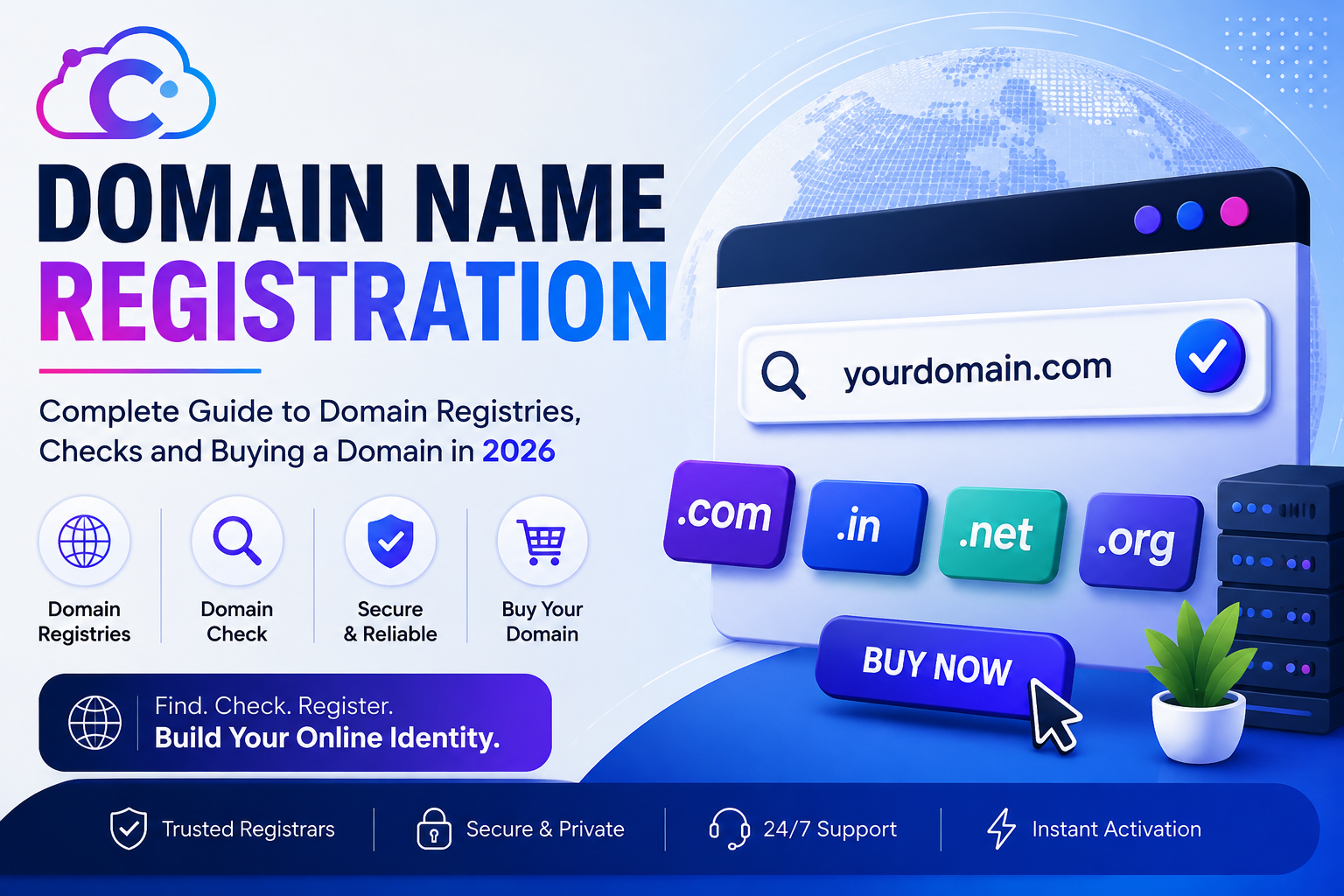
Domain Name Registration: Complete Guide to Domain Registries, Checks and Buying a Domain in 2026
Choosing the right domain is one of the first decisions you make when building an online business. Whether you are launching a company website, eCommerce store, blog, portfolio, startup, or professional service, domain name registration gives your brand a unique address on the internet.
A domain such as yourbusiness.com is easier to remember than a numerical IP address and can become an important part of your brand identity. But registering a domain is more than simply searching for an available name and paying for it.
You should understand how a domain registry works, what a registrar does, how an internet domain registration is processed, how to perform a domain registry check, and how different extensions such as .com, .in, .co.in, and .au are managed.
This guide explains the complete domain registration process in simple terms. It also covers the com domain registry, what people mean when searching for godaddy domain registry, and the basics of domain name registration AU.
For businesses looking for domain and hosting services, you can also explore Cloud India Hub.
Quick Answer: What Is Domain Name Registration?
Domain name registration is the process of registering an available domain name through a registrar for a specific period.
For example, if you want to use mybusiness.com, you first check whether the domain is available. If it is available, you select the registration period, provide the required information, complete payment, and the registrar processes the registration through the relevant domain registry.
After successful registration, you can connect the domain to your website hosting, email service, landing page, application, or other online services.
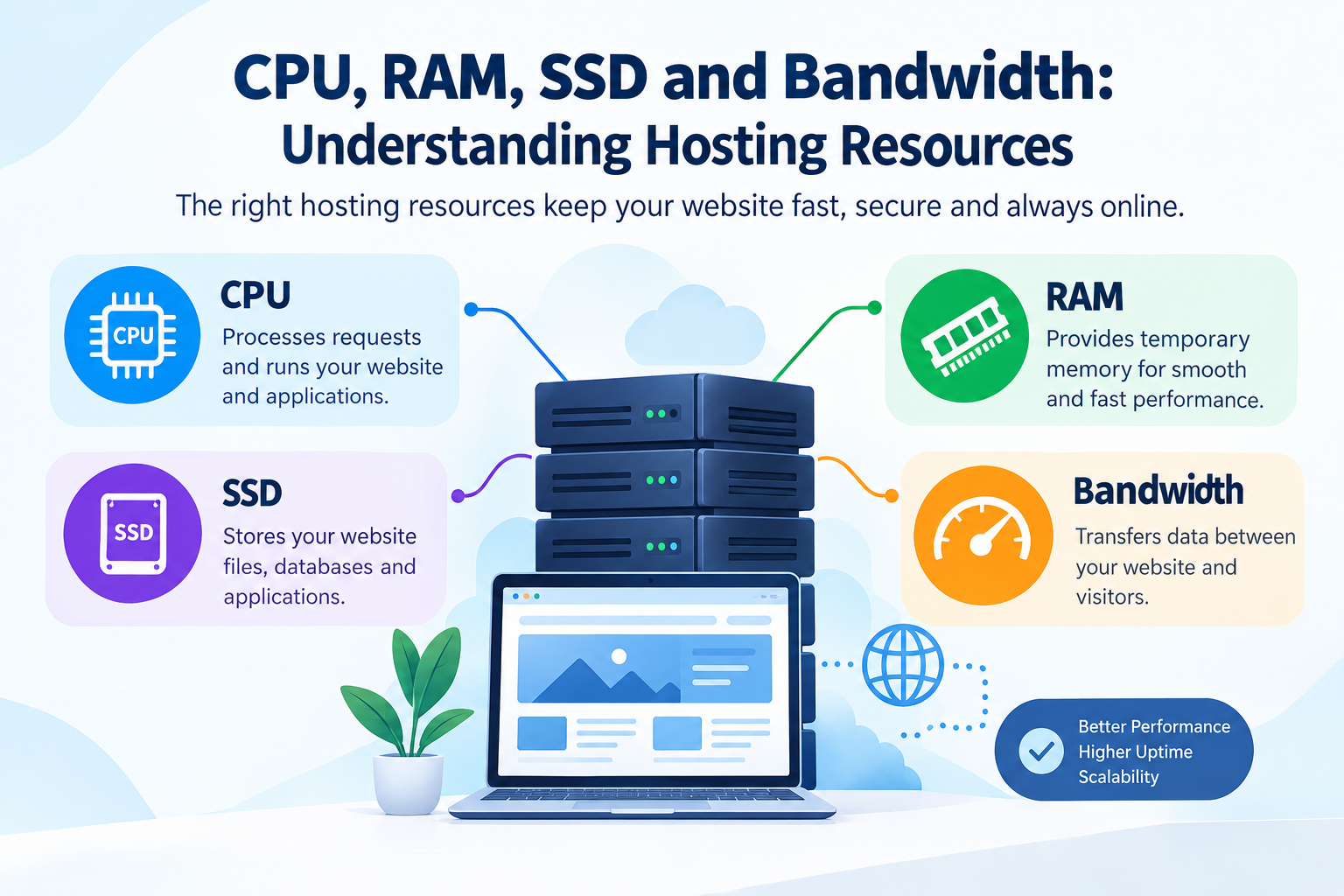
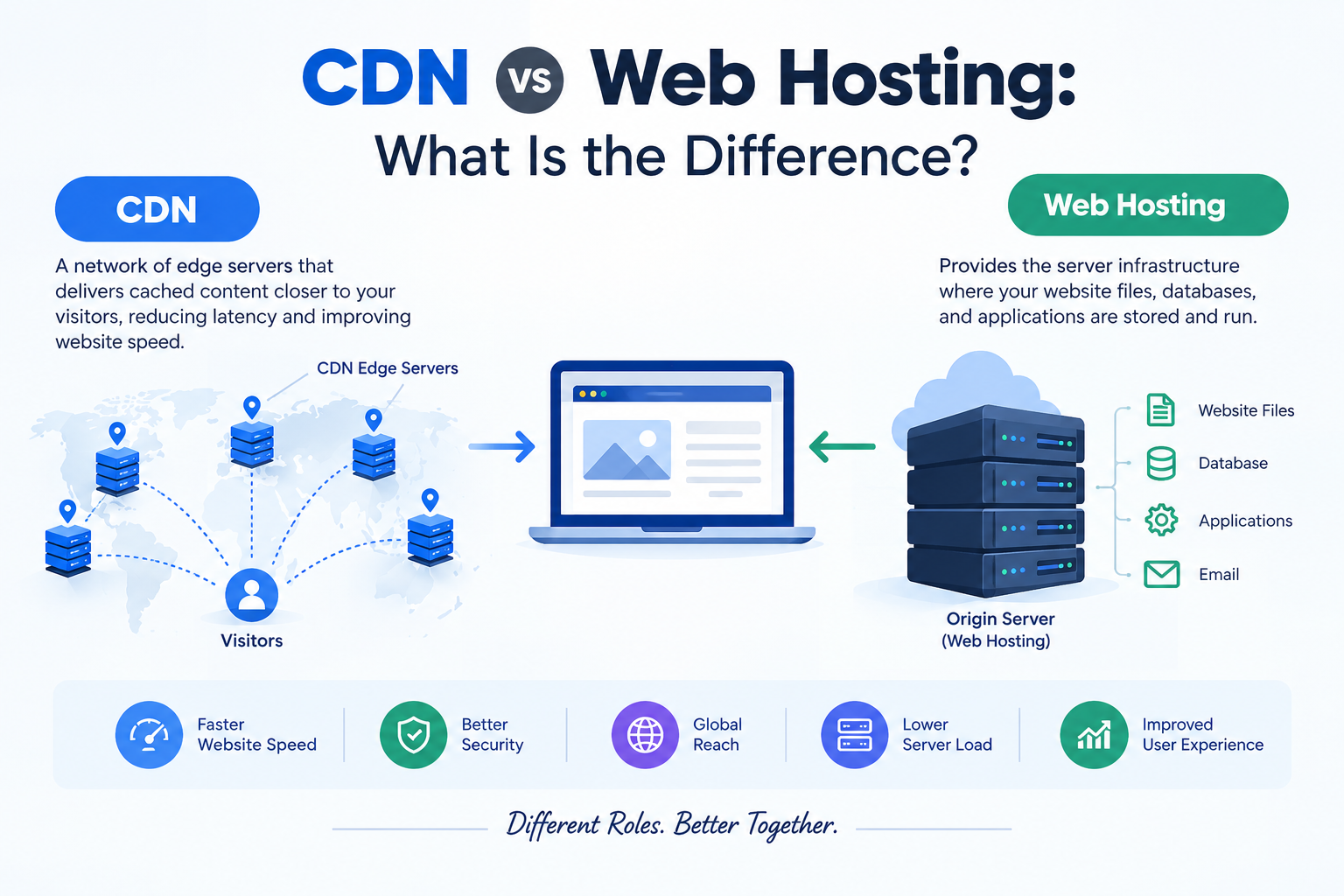
Domain registration does not automatically include website hosting. The domain is your online address, while hosting provides the server space where your website files and database are stored.
For a detailed introduction, read Domain Name Registration Guide.
What Is a Domain Name?
A domain name is the human-readable address people use to access a website.
For example:
www.example.com
A domain generally contains several parts:
-
wwwis a hostname or subdomain -
exampleis the registered domain name -
.comis the top-level domain, or TLD
A domain can be used for much more than a website.
You can use it for:
- Business websites
- Online stores
- Professional email
- Landing pages
- Blogs
- Portfolio websites
- Web applications
- Subdomains
- Marketing campaigns
For example, a business could use:
www.company.com for its website
support.company.com for customer support
mail.company.com for email services
Your domain therefore becomes an important part of your digital identity.
You can also read Buy Domain Name in India before choosing your domain.
How Does Domain Name Registration Work?
The domain registration system can initially seem complicated because several organizations are involved.
The basic structure is:
Registrant → Registrar → Registry → DNS → Internet User
You, as the registrant, select the domain.
The registrar provides the customer-facing registration service.
The registry maintains the authoritative database for the particular domain extension.
DNS then helps direct your domain to the appropriate website, email server, or other internet service.
What Is a Domain Registry?
A domain registry is the organization or registry operator responsible for maintaining the authoritative database for a particular domain namespace.
For example, different domain extensions have different registry operators and policies.
The registry manages the underlying infrastructure that allows registrars to create, update, renew, and manage domain registrations.
A registry and a registrar are not the same thing.
Registry vs Registrar
A registry operates the domain namespace.
A registrar provides domain registration services to customers.
For example, when you purchase a domain, you normally visit the registrar's website, search for the name, add it to your cart, provide your details, and complete payment.
The registrar then communicates with the appropriate registry.
The official .IN Registry explains that the registry works with registrars and that end users generally complete registrations through accredited registrars.
For more information, explore Domain Registration Services in India.
What Is Internet Domain Registration?
Internet domain registration is the process of registering a domain name so it can be used as an address on the internet.
The typical process includes:
- Choosing a domain name
- Checking availability
- Selecting an extension
- Choosing a registrar
- Providing registration details
- Completing payment
- Configuring DNS
- Connecting the domain to hosting or email
The exact rules can vary depending on the domain extension.
For example, .com, .in, and .au operate under different registry policies and eligibility requirements.
If you are starting a website in India, you can explore Internet Domain Registration Services.
What Is a Domain Registry Check?
A domain registry check is a lookup used to examine registration-related information about a domain.
Depending on the domain extension and lookup system, information may include:
- Domain status
- Registrar
- Registration date
- Expiration date
- Nameservers
- Registry status
- Domain lifecycle information
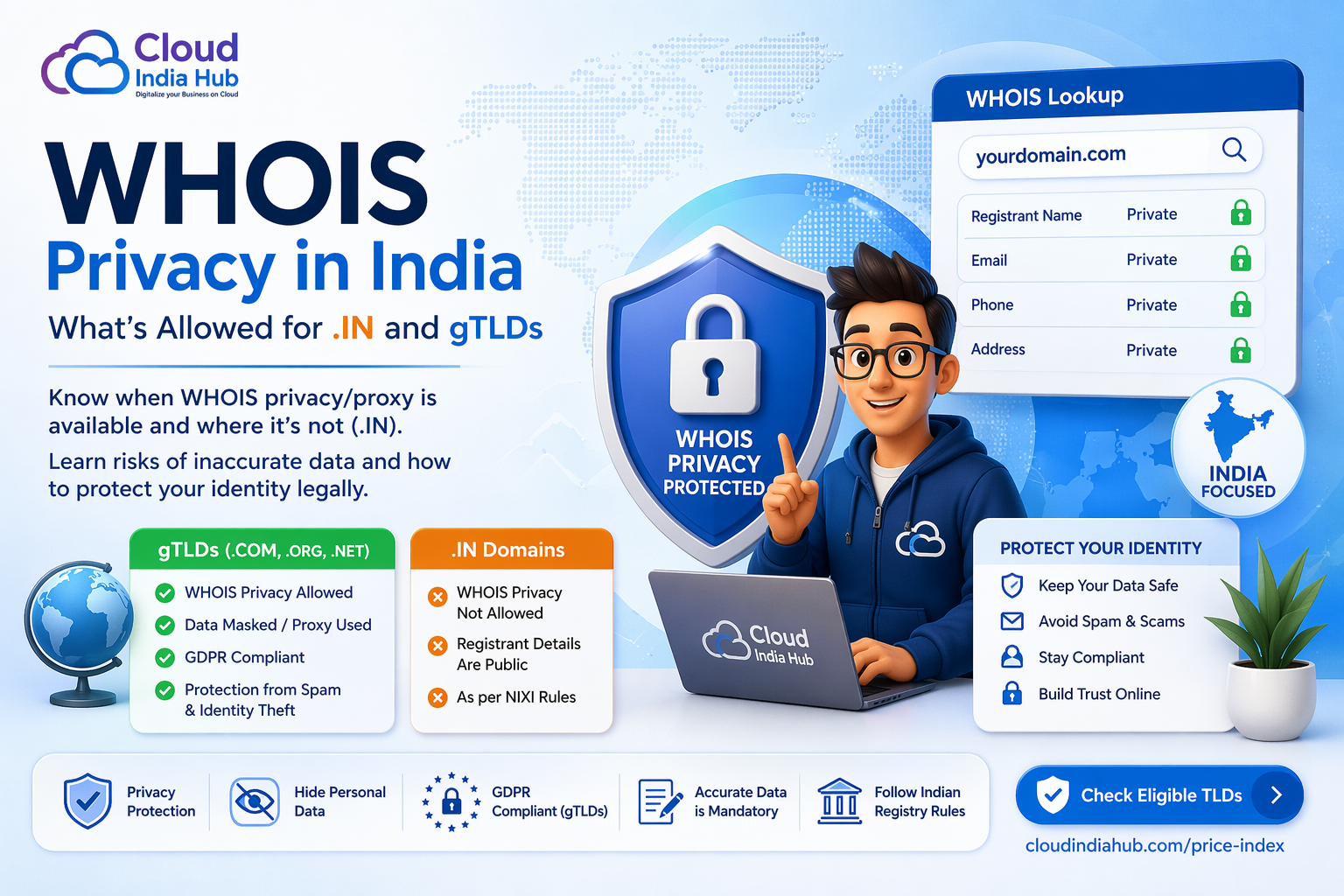
Some registrant information may not be publicly displayed because of privacy rules and applicable registry policies.
Why Perform a Domain Registry Check?
A domain registry check can be useful when:
- Purchasing a domain
- Investigating an existing domain
- Checking registration status
- Troubleshooting ownership questions
- Checking registrar information
- Reviewing domain status
- Investigating a domain before acquisition
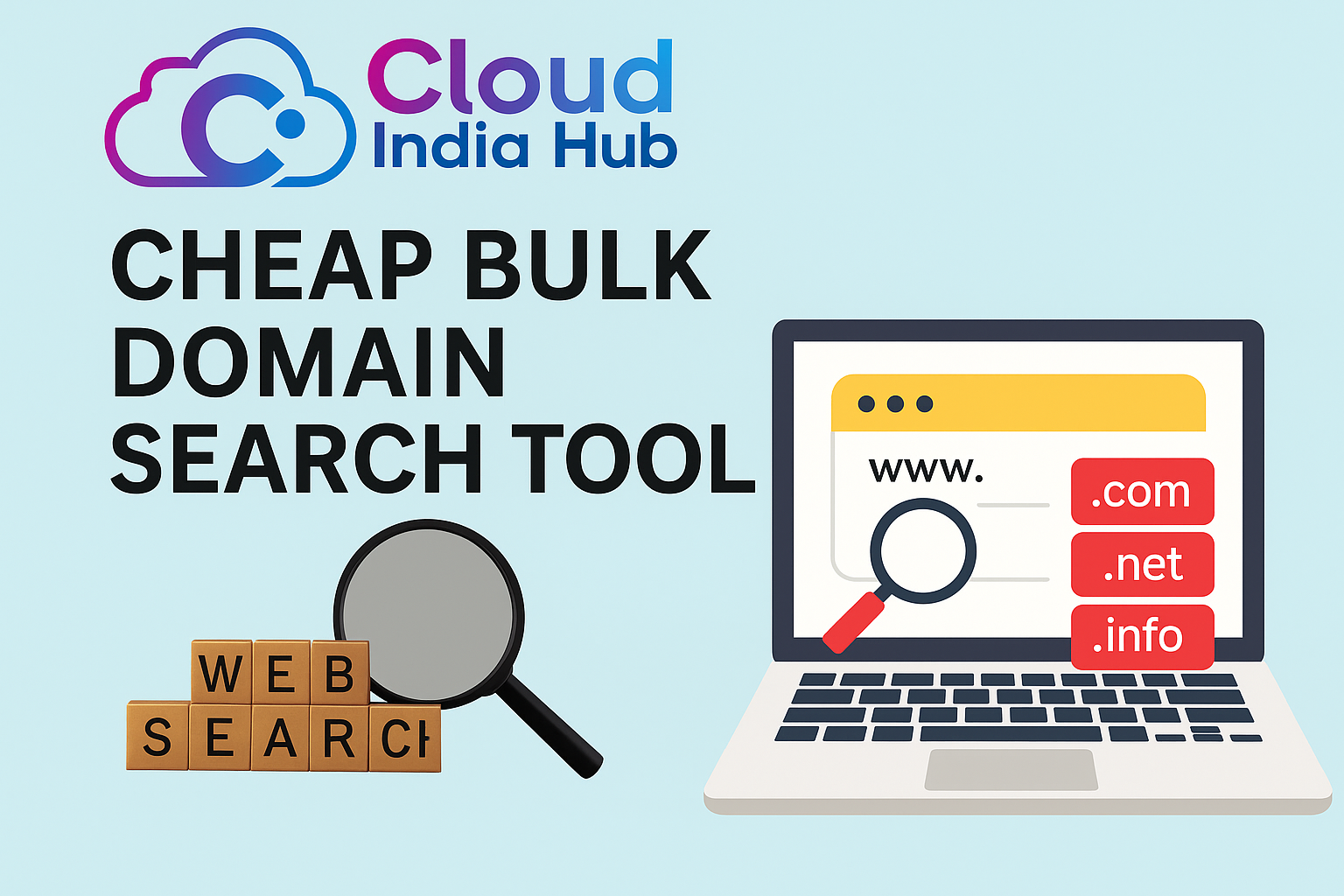
You can begin with Cloud India Hub Domain Name Checker.
Domain Registry Check vs Domain Availability Check
These terms are related but not identical.
A domain availability check asks whether a domain can currently be registered.
A domain registry check generally looks at information associated with an existing registration.
For example:
mybrand.com could be registered.
A registry lookup may show its status and registrar information.
A domain availability search would simply tell you that the domain is unavailable for new registration.
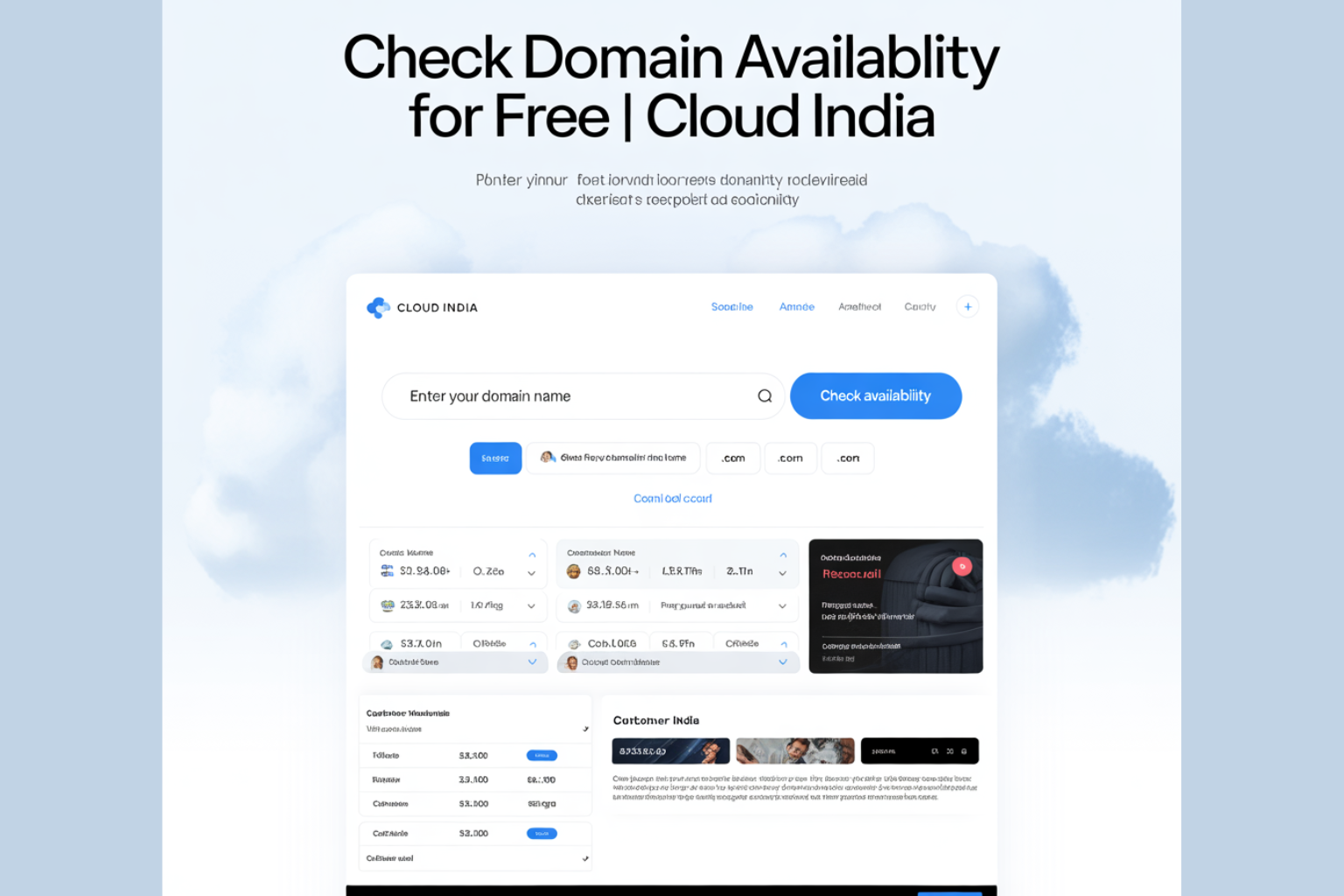
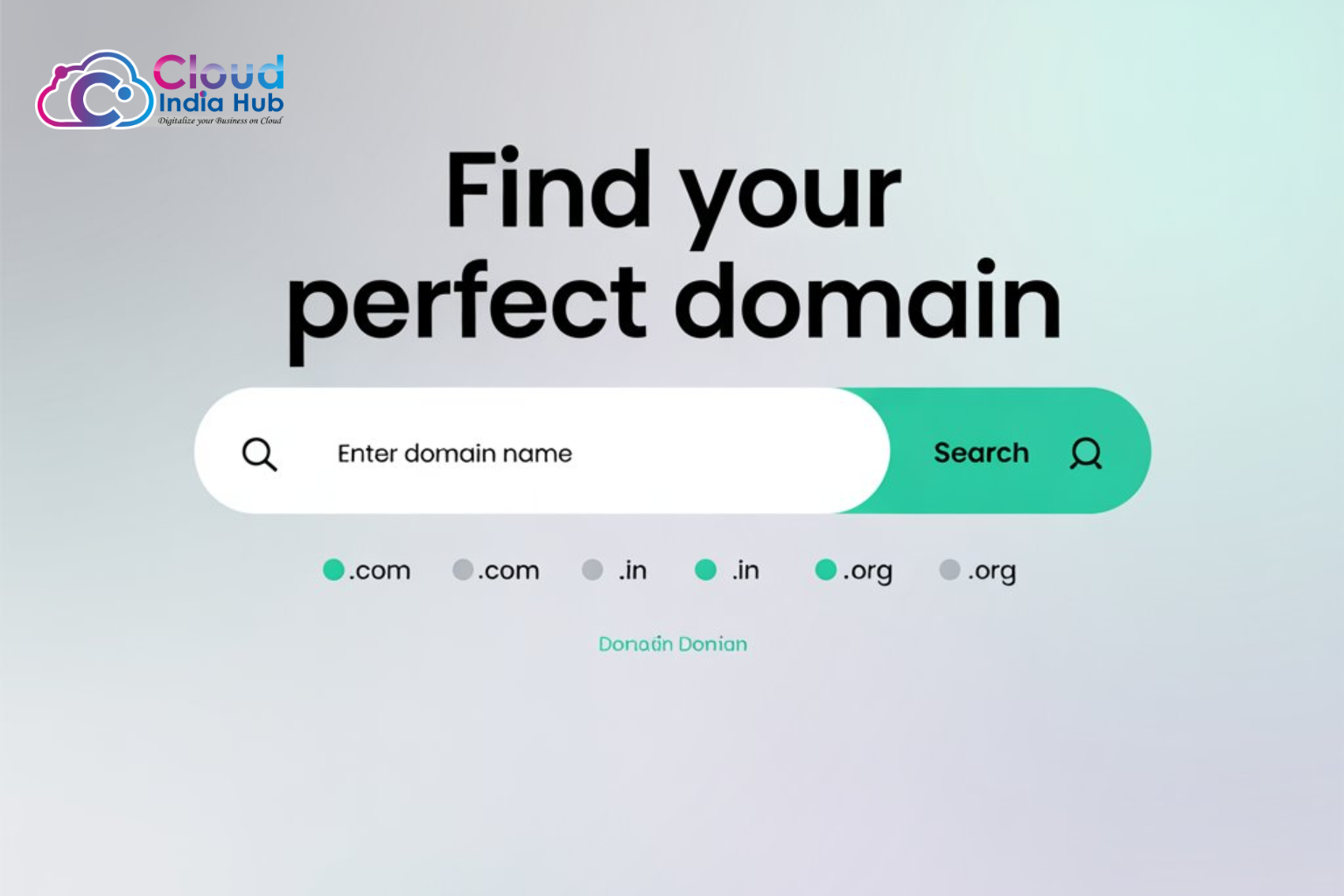
How to Check Domain Availability Before Registration
Before completing your domain name registration, check whether your preferred domain is available.
Suppose you want:
yourbrand.com
Enter the name into a domain search tool.
If the Domain Is Available
You can generally proceed with registration, provided the domain meets the requirements of the relevant extension.
If the Domain Is Already Registered
You cannot simply register the same domain again.
Instead, you can:
-
Try
.in -
Try
.co.in -
Try
.shop - Modify the brand name
- Use a shorter variation
- Consider another brandable name
You can also explore Buy Domain Online for guidance on domain availability and registration.
How to Choose the Right Domain Name
Your domain can remain associated with your business for years, so avoid choosing one purely because it is available.
Keep It Short
Shorter names are generally easier to remember and type.
Make It Easy to Spell
Avoid complicated spellings that customers may misunderstand when hearing the name.
Avoid Unnecessary Numbers
Numbers can create confusion.
For example, customers may not know whether your brand uses:
5
or
five
Avoid Excessive Hyphens
A simple domain is easier to communicate in conversations, advertisements, business cards, and social media.
Think About Future Growth
Your domain should not unnecessarily restrict your business.
For example, a company that plans to sell multiple technology products may prefer a broad brand name instead of a domain that describes only one product.
Check Trademark Conflicts
Domain availability does not automatically mean that a name is legally safe to use.
Before registering a business domain, check whether your chosen name conflicts with an existing trademark or established brand.
Which Domain Extension Should You Choose?
The extension is the part that appears after the dot.
Common examples include:
-
.com -
.in -
.co.in -
.org -
.net -
.shop -
.xyz -
.au
.com
.com is one of the most widely recognized generic top-level domains.
It is commonly used by:
- Businesses
- Startups
- eCommerce brands
- International companies
- Professional services
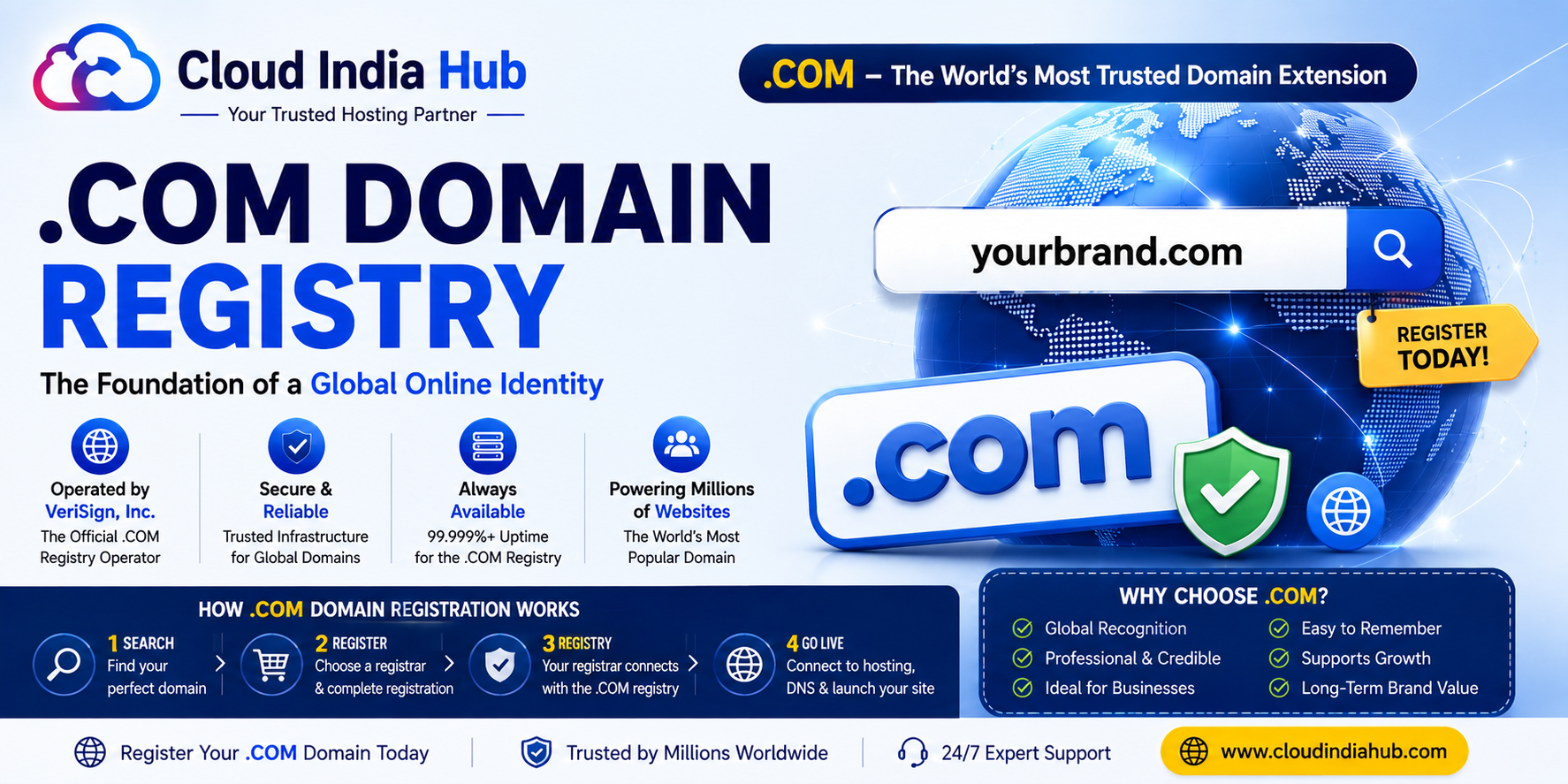
The current ICANN registry agreement identifies VeriSign, Inc. as the operator of the .com registry.
This is important when researching the com domain registry because the registry operator and the registrar are different roles.
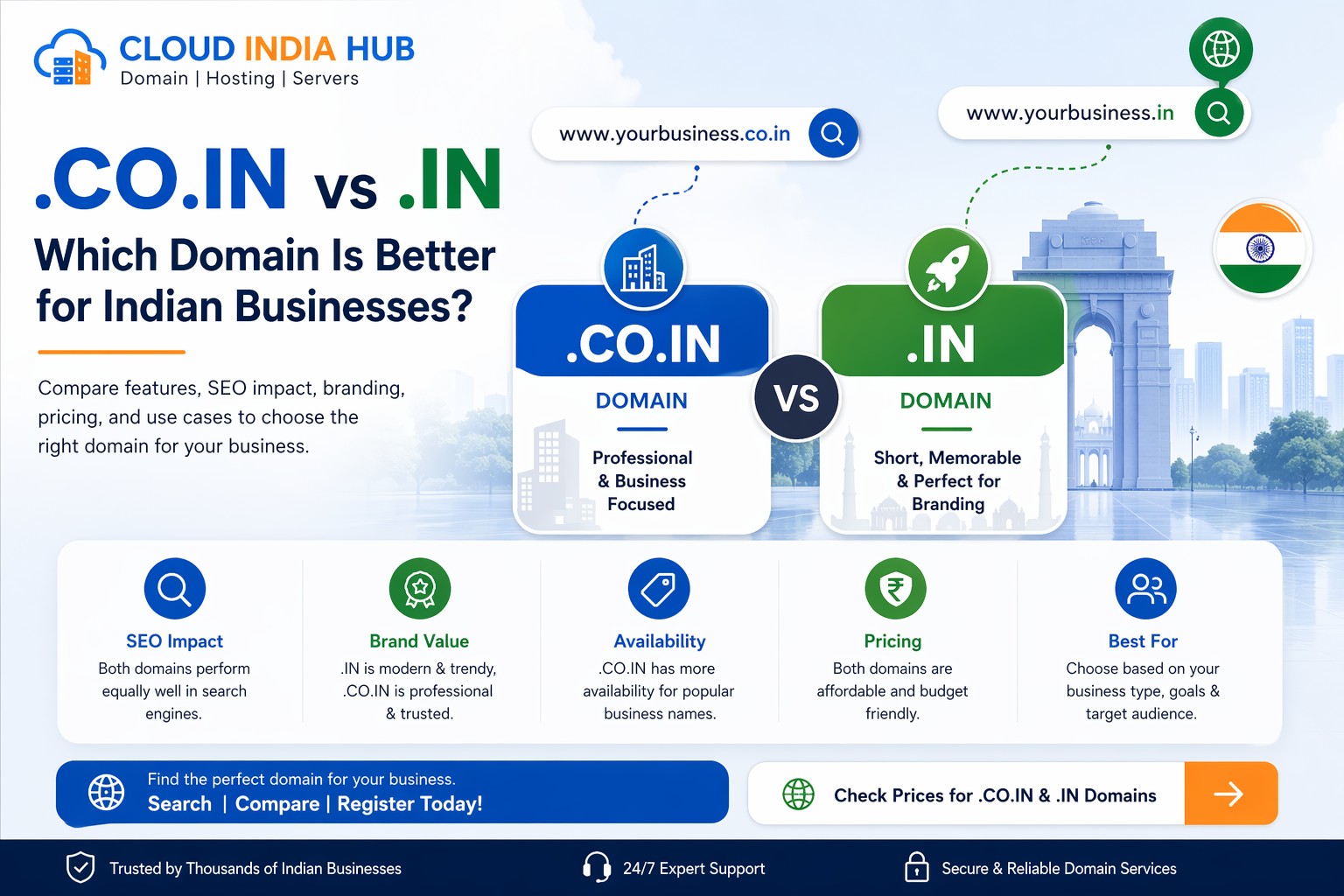
.in
.in is India's country-code top-level domain.
It can be an effective choice for businesses primarily targeting customers in India.
The official .IN Registry identifies .IN as India's country-code top-level domain and states that the registry is operated by NIXI.
.co.in
.co.in is another domain option commonly associated with Indian commercial businesses.
.shop
.shop can work well for eCommerce businesses because the extension immediately communicates an online shopping purpose.
.au
.au is Australia's country-code top-level domain.
Businesses targeting Australian customers may consider it, but Australian domain registration has its own eligibility and licensing requirements.
What Is the .com Domain Registry?
The com domain registry is the registry infrastructure responsible for the .com namespace.
The current ICANN registry agreement identifies VeriSign, Inc. as the .com registry operator.
The registry maintains the authoritative database and technical infrastructure for .com.
However, customers generally do not purchase a .com directly from the registry.
Instead, they use a registrar.
Registry, Registrar and Registrant Explained
Suppose you want:
mybusiness.com
Registrant
You or your company is the registrant.
Registrar
The registrar is the company through which you purchase and manage the domain.
Registry
The registry operates the .com domain infrastructure.
DNS
DNS directs the domain to the correct website, email service, or other destination.
Understanding these four terms makes domain registration much easier.
What Does GoDaddy Domain Registry Mean?
The phrase godaddy domain registry is commonly searched by people trying to understand GoDaddy's role in domain registration.
GoDaddy is primarily a registrar and domain services provider.
A registrar provides the customer-facing platform where users can:
- Search for domains
- Register domains
- Renew domains
- Transfer domains
- Manage DNS
- Manage domain settings
A registry is different.
For example, the .com registry is operated by VeriSign under the current ICANN agreement.
Cloud India Hub has a comparison resource that explains the difference between the two providers. Read Cloud India Hub vs GoDaddy: Best Domain Registrar in India.
Domain Name Registration AU: What Does It Mean?
Domain name registration AU generally refers to registering an Australian .au domain.
The .au namespace is administered under rules established by auDA, the Australian domain administration organization.
Unlike simply checking whether a generic domain is available, .au domains can have specific eligibility and licensing requirements.
auDA states that .au domain licensing is governed by its applicable .au Domain Administration Rules.
Businesses targeting Australia should therefore review current eligibility requirements before completing registration.
.au vs .com vs .in
| Extension | Main Market | Suitable For | Important Consideration |
|---|---|---|---|
| .com | Global | Businesses and brands | Widely recognized |
| .in | India | Indian businesses | Strong local identity |
| .co.in | India | Commercial businesses | Indian commercial positioning |
| .au | Australia | Australian businesses | Eligibility requirements |
| .shop | Global | Online stores | ECommerce-focused branding |
There is no universally perfect extension.
Your target audience, brand strategy, availability, and long-term plans should determine your choice.
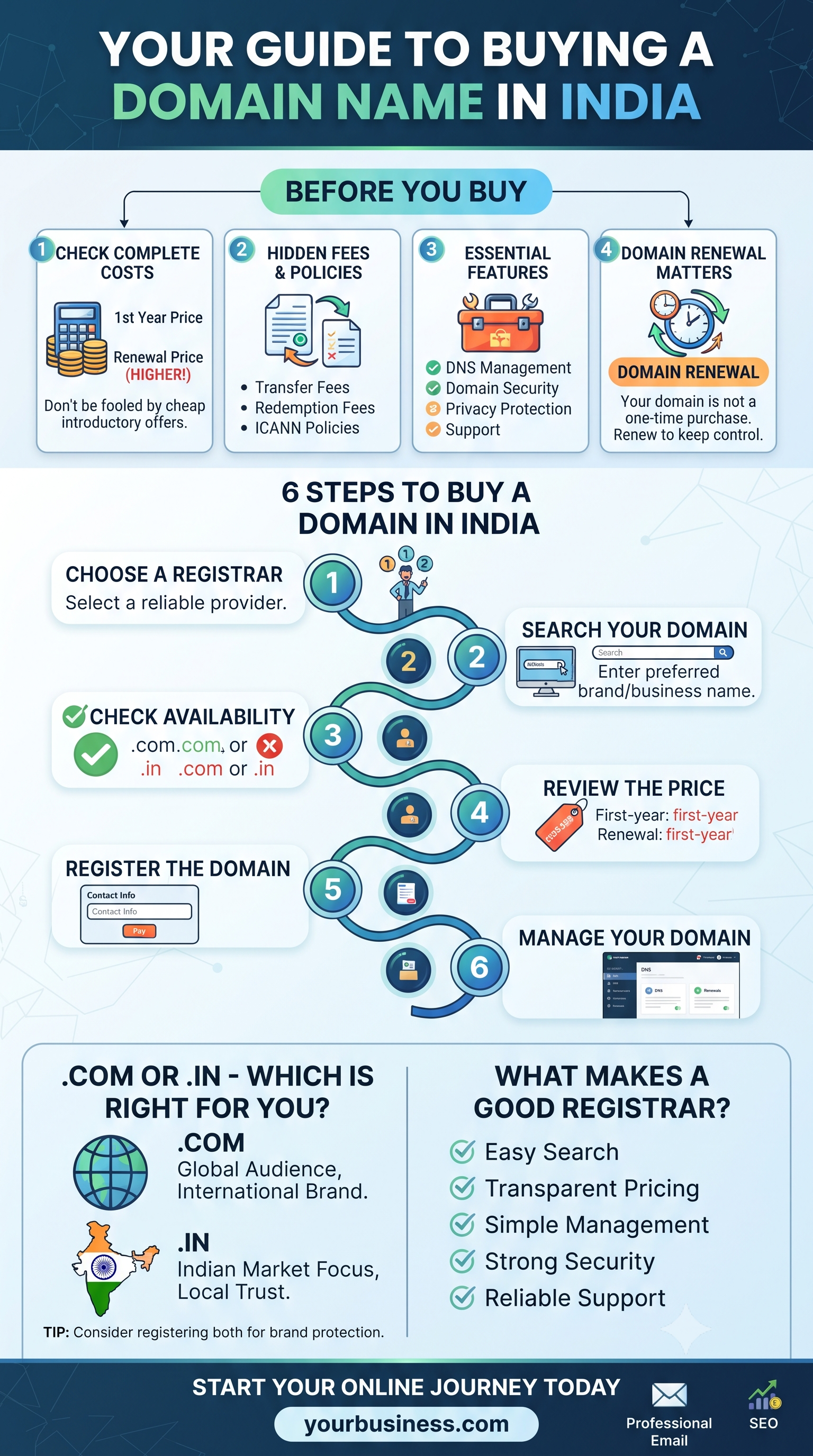
Step-by-Step Domain Name Registration Process
Now that you understand the registry and registrar structure, let's look at the actual registration process.
Step 1: Choose Your Domain Name
Create two or three possible names.
Having alternatives is useful because your first choice may already be registered.
Step 2: Check Availability
Use a domain search tool before investing heavily in your branding.
You can also explore Purchase Domain Name Guide.
Step 3: Select the Extension
Choose an extension based on:
- Target audience
- Geographic market
- Brand positioning
- Industry
- Availability
- Budget
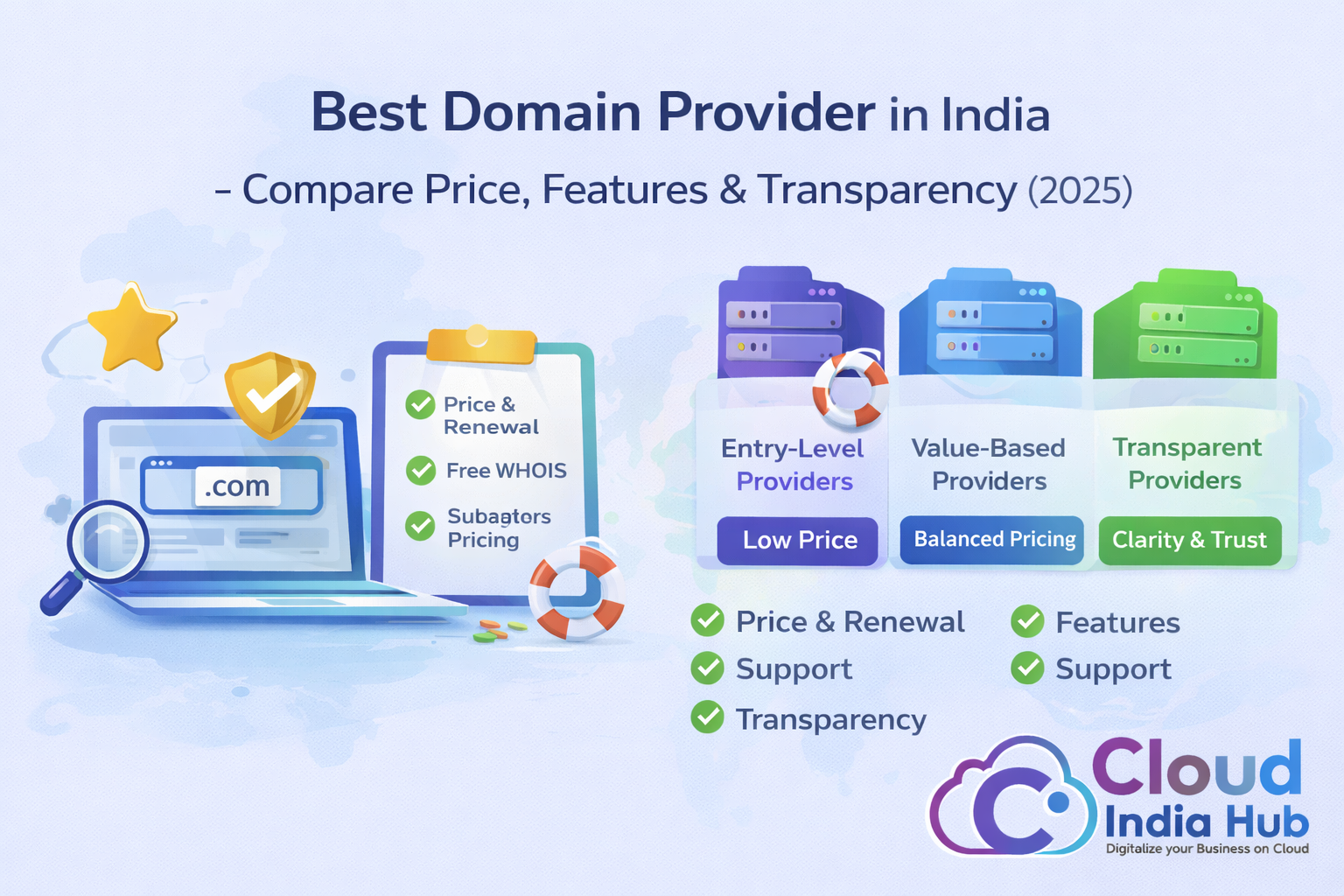
Step 4: Compare Registrars
Don't compare only the first-year price.
Check:
- Registration cost
- Renewal cost
- DNS management
- Domain locking
- Transfer process
- Privacy options
- Customer support
Step 5: Add the Domain to Your Cart
Review exactly what you are purchasing.
Check whether additional services have been automatically selected.
Step 6: Enter Registration Details
Provide accurate information required by the registrar and applicable registry.
Some extensions have additional eligibility requirements.
Step 7: Complete Payment
Before payment, check:
- Registration term
- Renewal price
- Taxes
- Privacy services
- Add-ons
- Total cost
Step 8: Verify the Domain
Depending on the extension and registration circumstances, you may need to verify certain information.
Step 9: Configure DNS
Once registered, configure DNS to connect your domain to your website or email service.
Step 10: Connect Hosting
If you are launching a website, point the domain toward your hosting server.
Cloud India Hub provides Web Hosting Plans for websites with different resource requirements.
Domain Name Registration and Web Hosting: What's the Difference?
Many beginners assume that registering a domain automatically creates a website.
It does not.
Domain
Your domain is your website's address.
Hosting
Hosting stores your website files and databases.
SSL
SSL enables secure HTTPS communication.
Email Hosting
Email hosting provides professional mailboxes using your domain.
A simple comparison is:
Domain = Address
Hosting = Building
Website = Contents inside the building
Email = Business communication system
If you need both services, read Hosting and Domain Services Guide.
How Much Does Domain Name Registration Cost?
There is no single price for every domain.
The cost can depend on:
- Domain extension
- Registrar
- Promotional pricing
- Registration period
- Renewal pricing
- Premium domain status
- Privacy services
- Additional products
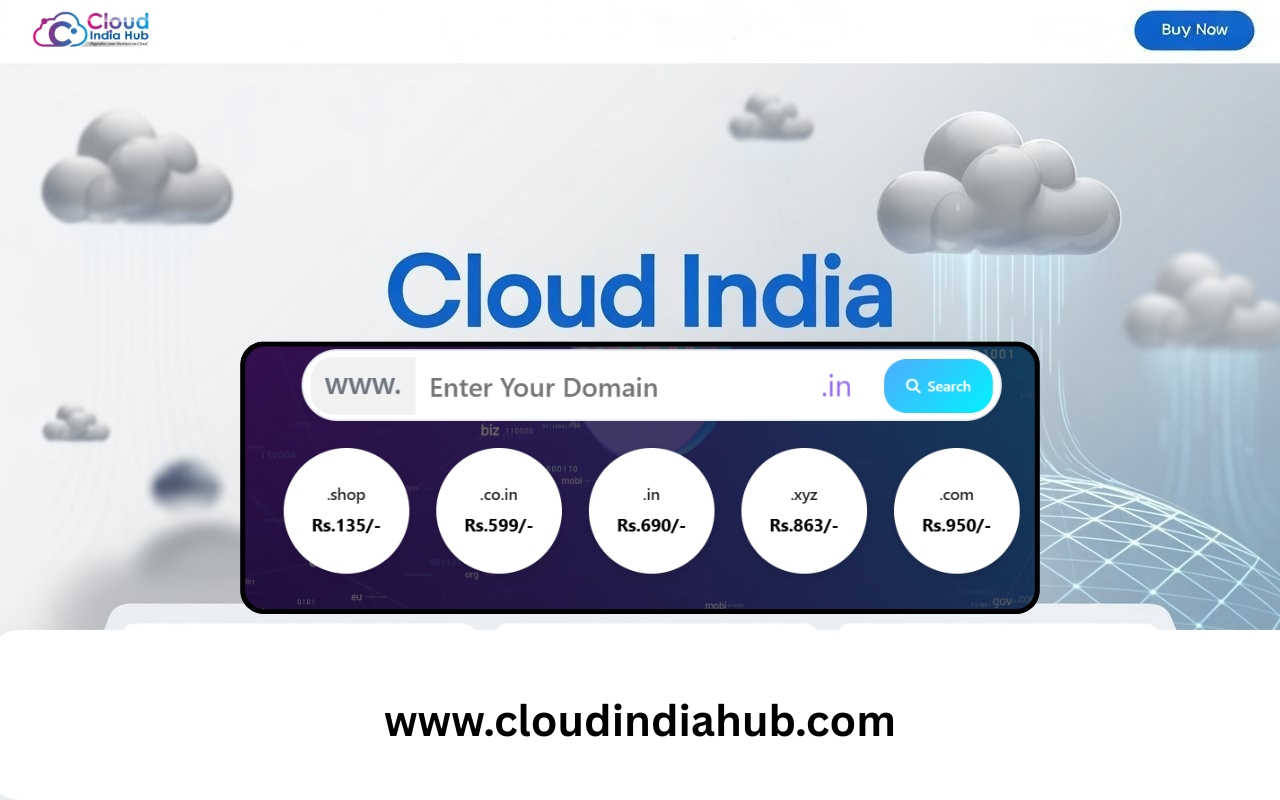
Cloud India Hub currently promotes multiple domain extensions and registration offers. Pricing and promotional conditions can change, so always check the current checkout amount and renewal price before purchasing.
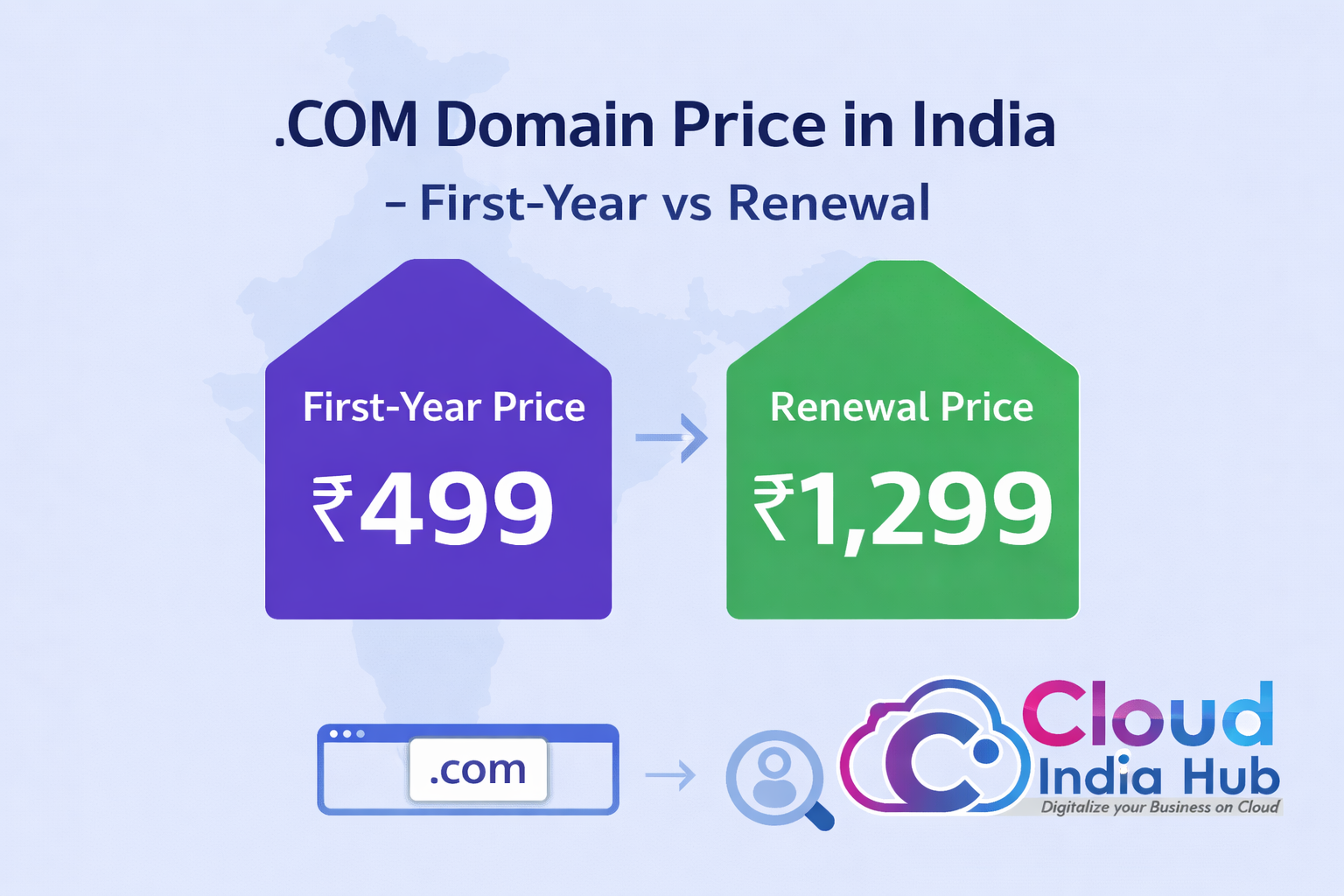
Registration Price vs Renewal Price
A domain may be inexpensive during the initial registration period but more expensive during renewal.
For this reason, look at the total long-term cost.
| Cost Factor | What You Should Check |
|---|---|
| Initial Registration | First-year or promotional price |
| Renewal | Price after the initial term |
| Transfer | Transfer requirements and charges |
| Privacy | Whether privacy protection is included |
| Premium Domain | Additional acquisition cost |
| Add-ons | Email, SSL and other services |
| Taxes | Applicable taxes at checkout |
For more information about affordable domains, read Cheap Domain Registration Guide.
What Is Domain Renewal?
Domain renewal extends your registration period.
For example, if you register a domain for one year, you need to renew it before the registration expires if you want to continue using it.
Why Renewal Matters
Your domain may be connected to:
- Your website
- Business email
- Advertising campaigns
- Social media profiles
- Printed marketing materials
- Customer communications
If the domain expires, these services can be disrupted.
How to Avoid Accidental Expiration
- Enable auto-renewal
- Keep your payment details updated
- Monitor the renewal date
- Keep your registrar email accessible
- Review renewal notifications
How to Protect Your Domain
Completing domain name registration is only the beginning.
You should also secure the domain account.
Enable Domain Locking
Domain locking can help prevent unauthorized transfers.
Use Strong Account Security
Use a strong, unique password for your registrar account.
Where available, enable multi-factor authentication.
Keep Contact Information Updated
Your registrar may use your registered email address for important notifications.
Review DNS Settings
Periodically check whether your nameservers and DNS records are correct.
Cloud India Hub provides domain management features such as DNS management and domain locking. You can learn more through Cloud India Hub's Domain Registration Services.
Domain Registry Check vs DNS Check
These checks are often confused.
A domain registry check focuses on registration-related information and domain status.
A DNS check examines records that tell internet systems where your domain's services are located.
For example, DNS records can determine:
- Where your website is hosted
- Where email is delivered
- Which server handles a subdomain
- Which services are authorized for your domain
A domain can be properly registered while its DNS configuration is incorrect.
This is why both registration and DNS configuration matter.
Can You Transfer a Registered Domain?
Yes, many domains can be transferred between registrars, subject to the relevant registry rules.
A transfer moves domain management from one registrar to another.
It does not mean that you are registering an entirely new domain.
Before transferring, check:
- Domain eligibility
- Transfer lock
- Authorization requirements
- Contact verification
- Transfer charges
- Remaining registration period
For users considering a registrar change, the Cloud India Hub vs GoDaddy comparison can help explain the differences between providers.
Can You Buy a Domain Without Hosting?
Yes.
Domain registration and web hosting are separate services.
You can:
- Register the domain.
- Keep the domain parked.
- Purchase hosting later.
- Connect the domain when your website is ready.
However, if you are launching a website immediately, buying domain and hosting together can simplify configuration.
Cloud India Hub also offers Buy Domain and Hosting solutions.
What Happens When a Domain Expires?
The exact domain lifecycle varies according to the extension and registrar.
Generally, an expired domain can move through different stages before potentially becoming available for registration again.
This can create serious problems for a business.
Your:
- Website
- Marketing campaigns
- Business cards
- Search traffic
- Customer communication
may all depend on the domain.
Therefore, renewing on time is important.
Cloud India Hub's Terms and Conditions explain that domain services are subject to applicable registry policies and renewal terms.
Common Domain Name Registration Mistakes
Choosing Only Based on Price
The lowest first-year price does not necessarily represent the lowest long-term cost.
Ignoring Renewal Costs
Always check what the domain will cost after the promotional period.
Selecting a Difficult Name
Long, confusing names can lead to typing errors.
Forgetting Domain Renewal
An expired domain can disrupt your website and email.
Ignoring Trademark Issues
Availability does not guarantee trademark safety.
Buying Unnecessary Add-ons
Review every optional product before checkout.
Using Incorrect Information
Provide accurate registration information and keep it updated.
For more common domain questions, visit Cloud India Hub FAQ.
How Domain Name Registration Supports Your Brand
Your domain can influence how people perceive your business.
A professional domain can help create consistency across:
- Website
- Social media
- Advertising
- Business cards
- Packaging
- Marketing campaigns
For example:
yourbrand.com
can support email addresses such as:
info@yourbrand.com
sales@yourbrand.com
support@yourbrand.com
This creates a consistent digital identity.
If you're building a WordPress website, you can also explore WordPress Hosting.
Why Choose Cloud India Hub for Domain Name Registration?
Cloud India Hub provides domain registration and hosting services for businesses, startups, eCommerce websites, bloggers, and individuals.
Its current website provides domain registration options, domain management, DNS management, domain locking, hosting, SSL, email, and related website services.
Businesses can also explore Cloud India Hub's About Us page to learn more about the company.
For additional domain and hosting resources, visit the Cloud India Hub Blog.
AEO Quick Answers
What is domain name registration?
Domain name registration is the process of registering an available domain through a registrar for a specific period.
What is a domain registry?
A domain registry maintains the authoritative database and technical infrastructure for a particular domain namespace.
What is a domain registrar?
A registrar is the customer-facing company through which users register and manage domain names.
What is a domain registry check?
A domain registry check is a lookup used to review registration-related information and status associated with a domain.
Who operates the .com domain registry?
The current ICANN registry agreement identifies VeriSign, Inc. as the .com registry operator.
Is GoDaddy a domain registry?
No. GoDaddy is primarily a registrar and domain services provider. The .com registry, for example, is operated by VeriSign.
What does domain name registration AU mean?
Domain name registration AU generally refers to registering an Australian .au domain, which is subject to auDA's applicable eligibility and licensing requirements.
Can I register a domain without hosting?
Yes. Domain registration and web hosting are separate services.
Frequently Asked Questions
1. How does domain name registration work?
Domain name registration starts when you search for an available domain through a registrar. You select the domain and extension, provide the required information, choose the registration period, and complete payment. The registrar then processes the registration through the appropriate registry.
2. What is the difference between a domain registry and a registrar?
A registry operates the authoritative infrastructure and database for a domain namespace, while a registrar provides the customer-facing service used to register and manage domains.
3. How can I perform a domain registry check?
You can use an appropriate domain lookup or registration-data service to review available registration information. The information displayed depends on the domain extension, registry rules, and privacy policies.
4. Is GoDaddy the .com domain registry?
No. GoDaddy is a registrar and domain services provider. The current ICANN agreement identifies VeriSign as the .com registry operator.
5. Is .in better than .com for an Indian business?
There is no universal answer. .in can communicate a strong Indian market focus, while .com is widely recognized internationally. Choose based on your audience, brand strategy, and availability.
6. What should I check before registering a domain?
Check the domain name, extension, registration price, renewal price, registrar, DNS controls, transfer policies, privacy options, security features, and applicable eligibility requirements.
7. Can I transfer my domain to another registrar?
In many cases, yes. However, the exact transfer rules depend on the domain extension and registry policies.
8. Can domain registration include hosting?
Domain registration itself does not automatically include hosting. Some providers offer domain and hosting bundles, which can simplify website setup.
Conclusion
Domain name registration is the foundation of your online identity. Whether you are launching a small business, eCommerce store, startup, personal website, or international brand, understanding how domains work can help you make a better long-term decision.
A domain registry maintains the infrastructure and authoritative database for a particular domain namespace, while a registrar provides the service through which customers register and manage domains. This distinction is particularly important when researching terms such as domain registry check, com domain registry, and godaddy domain registry.






















































































































































































Leave A Comment