
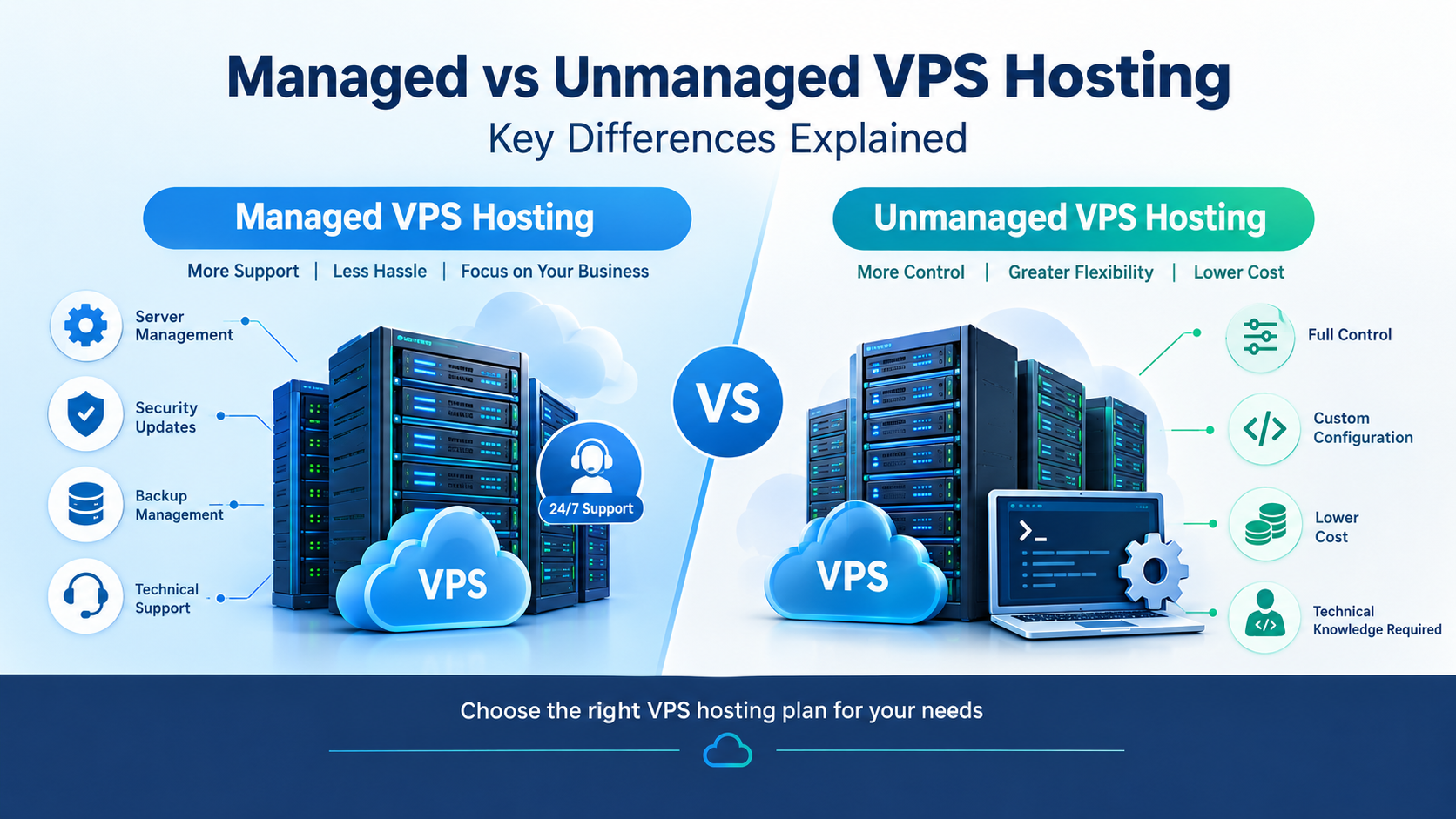
Key Differences Explained
Table of Contents
- Introduction
- What Is VPS Hosting?
- What Is Managed VPS Hosting?
- What Is Unmanaged VPS Hosting?
- Managed vs Unmanaged VPS Hosting: Key Differences
- Managed VPS Hosting: Advantages and Disadvantages
- Unmanaged VPS Hosting: Advantages and Disadvantages
- Which VPS Hosting Is Right for You?
- Managed vs Unmanaged VPS: Cost Comparison
- Security and Server Management
- Performance and Scalability
- Frequently Asked Questions
- Conclusion
Introduction
Choosing the right hosting solution is an important decision for any website or online business. As websites grow, shared hosting may no longer provide the performance, control, and resources they need. This is where VPS hosting becomes a popular option.
However, choosing a VPS is only the first step. You also need to decide between managed VPS hosting and unmanaged VPS hosting.
Both options provide dedicated resources and greater control compared with shared hosting, but the level of technical support and server management is very different.
In this guide, we'll explain managed vs unmanaged VPS hosting, their key differences, advantages, disadvantages, costs, security considerations, and which option may be suitable for different types of users.
What Is VPS Hosting?
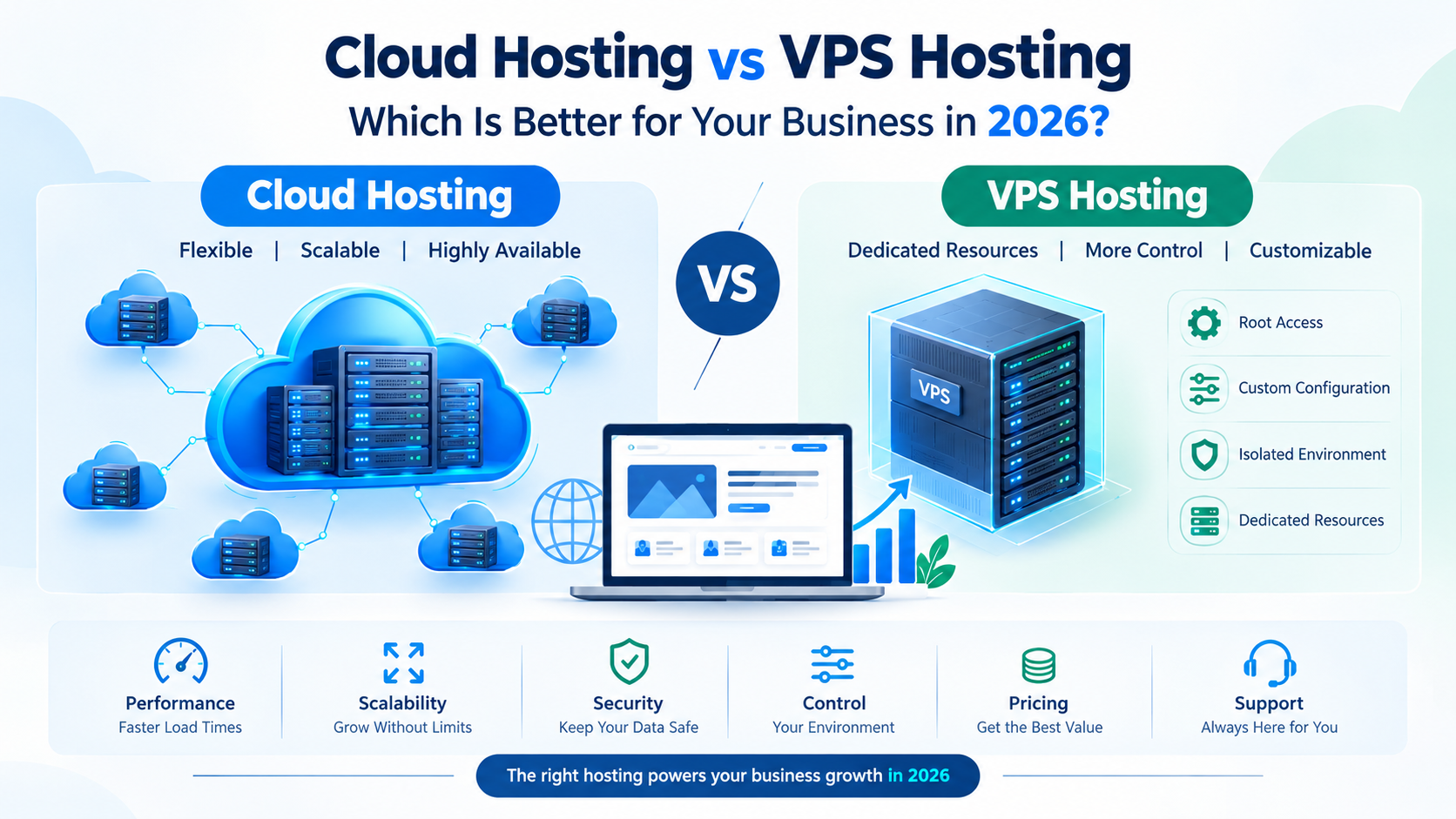
VPS (Virtual Private Server) hosting is a type of web hosting where a physical server is divided into multiple virtual servers using virtualization technology.
Each VPS operates independently and generally has its own allocated resources, such as:
- CPU
- RAM
- Storage
- Operating system
- Network resources
- Root or administrative access
Unlike shared hosting, VPS hosting gives you more control over the server environment.
VPS hosting is commonly used for:
- Business websites
- E-commerce websites
- Web applications
- WordPress websites with higher traffic
- Development environments
- Databases
- SaaS applications
- Websites requiring customized server configurations
What Is Managed VPS Hosting?
Managed VPS hosting is a hosting service where the hosting provider takes care of many technical aspects of managing the server.
Depending on the hosting provider and plan, managed services may include:
- Server setup
- Operating system updates
- Security monitoring
- Server optimization
- Backup management
- Technical support
- Software installation
- Performance monitoring
- Troubleshooting
This means website owners don't necessarily need advanced server administration skills to operate their VPS.
Who Is Managed VPS Hosting Suitable For?
Managed VPS hosting can be useful for:
- Small and medium-sized businesses
- Website owners without server administration experience
- Agencies managing multiple websites
- E-commerce businesses
- Bloggers and content publishers
- Businesses that want to focus on their website rather than server maintenance
The main advantage is convenience. The hosting provider handles many technical responsibilities while you focus on your website and business.
What Is Unmanaged VPS Hosting?
Unmanaged VPS hosting provides the VPS infrastructure, but the customer is generally responsible for managing the server.
Depending on the provider, this can include:
- Server configuration
- Operating system updates
- Security configuration
- Software installation
- Firewall configuration
- Backups
- Server monitoring
- Performance optimization
- Troubleshooting
The exact responsibilities depend on the hosting provider's terms and support policy.
Unmanaged VPS hosting provides greater flexibility and control, but it requires more technical knowledge.
Who Is Unmanaged VPS Hosting Suitable For?
Unmanaged VPS hosting can be suitable for:
- System administrators
- Developers
- Experienced website owners
- Technical teams
- Agencies with server management expertise
- Businesses that require customized server configurations
Managed vs Unmanaged VPS Hosting: Key Differences
The biggest difference between managed and unmanaged VPS hosting is who handles the server management.
| Feature | Managed VPS Hosting | Unmanaged VPS Hosting |
|---|---|---|
| Server Management | Hosting provider handles many tasks | Customer manages the server |
| Technical Knowledge | Basic to moderate | Advanced recommended |
| Server Configuration | Provider assistance | Customer responsibility |
| Security Updates | Often handled by provider | Usually customer responsibility |
| Backups | May be included depending on plan | Usually customer-managed |
| Technical Support | More extensive | Usually limited to infrastructure |
| Customization | May have some limitations | Generally greater control |
| Maintenance | Provider handles many tasks | Customer handles maintenance |
| Cost | Usually higher | Usually lower |
| Control | Less hands-on control | More hands-on control |
| Best For | Businesses and non-technical users | Developers and technical users |
Note: Features vary between hosting providers, so always check exactly what is included in a VPS plan before purchasing.
Managed VPS Hosting: Advantages and Disadvantages
Advantages of Managed VPS Hosting
1. Less Technical Work
The hosting provider takes care of many server administration tasks. This allows you to spend more time managing your website and business.
2. Technical Support
Managed VPS plans typically offer more assistance with server-related issues than unmanaged plans.
3. Easier Security Management
Providers may assist with security updates, monitoring, firewall configuration, and other server-level security tasks.
4. Time Saving
Businesses can avoid spending hours dealing with server maintenance and configuration.
5. Suitable for Beginners
Users without extensive Linux or server administration knowledge may find managed VPS hosting easier to operate.
Disadvantages of Managed VPS Hosting
Higher Cost
Managed VPS hosting generally costs more because server administration and support are included in the service.
Less Direct Control
Some providers may restrict certain configurations or software changes to maintain server stability and security.
Unmanaged VPS Hosting: Advantages and Disadvantages
Advantages of Unmanaged VPS Hosting
1. Greater Control
You typically have more freedom to configure the server according to your requirements.
2. More Customization
Developers can install and configure specific software, applications, frameworks, and server environments.
3. Lower Hosting Cost
Because server management is largely handled by the customer, unmanaged VPS plans can be more affordable.
4. Suitable for Technical Users
Experienced developers and system administrators can take advantage of the additional control.
Disadvantages of Unmanaged VPS Hosting
Requires Technical Knowledge
You may need knowledge of Linux, networking, firewalls, server security, databases, and command-line administration.
More Responsibility
Server maintenance, updates, security, backups, and troubleshooting may be your responsibility.
Time-Consuming
Managing a server can require significant time, especially when technical problems occur.
Managed vs Unmanaged VPS: Cost Comparison
Price is an important consideration when choosing between managed and unmanaged VPS hosting.
Unmanaged VPS hosting is generally cheaper because you are responsible for most server administration tasks.
Managed VPS hosting typically costs more because the provider handles additional technical services and support.
However, the cheapest VPS plan isn't necessarily the most cost-effective option.
For example, a business may choose an inexpensive unmanaged VPS but later need to hire a server administrator to handle maintenance and security. In that situation, the total cost can become higher.
Therefore, consider both the hosting price and the value of your time and technical resources.
Security and Server Management
Security is one of the most important factors when choosing VPS hosting.
With managed VPS hosting, the provider may assist with tasks such as:
- Security updates
- Server monitoring
- Firewall configuration
- Malware-related troubleshooting
- Backup management
- Server hardening
With unmanaged VPS hosting, these responsibilities are usually handled by the customer.
Regardless of the hosting type, website owners should maintain good security practices, including:
- Using strong passwords
- Keeping software updated
- Using HTTPS/SSL
- Configuring firewalls appropriately
- Maintaining reliable backups
- Using secure authentication methods
- Monitoring unusual server activity
Performance and Scalability
Both managed and unmanaged VPS hosting can provide strong performance because VPS environments offer dedicated or allocated resources.
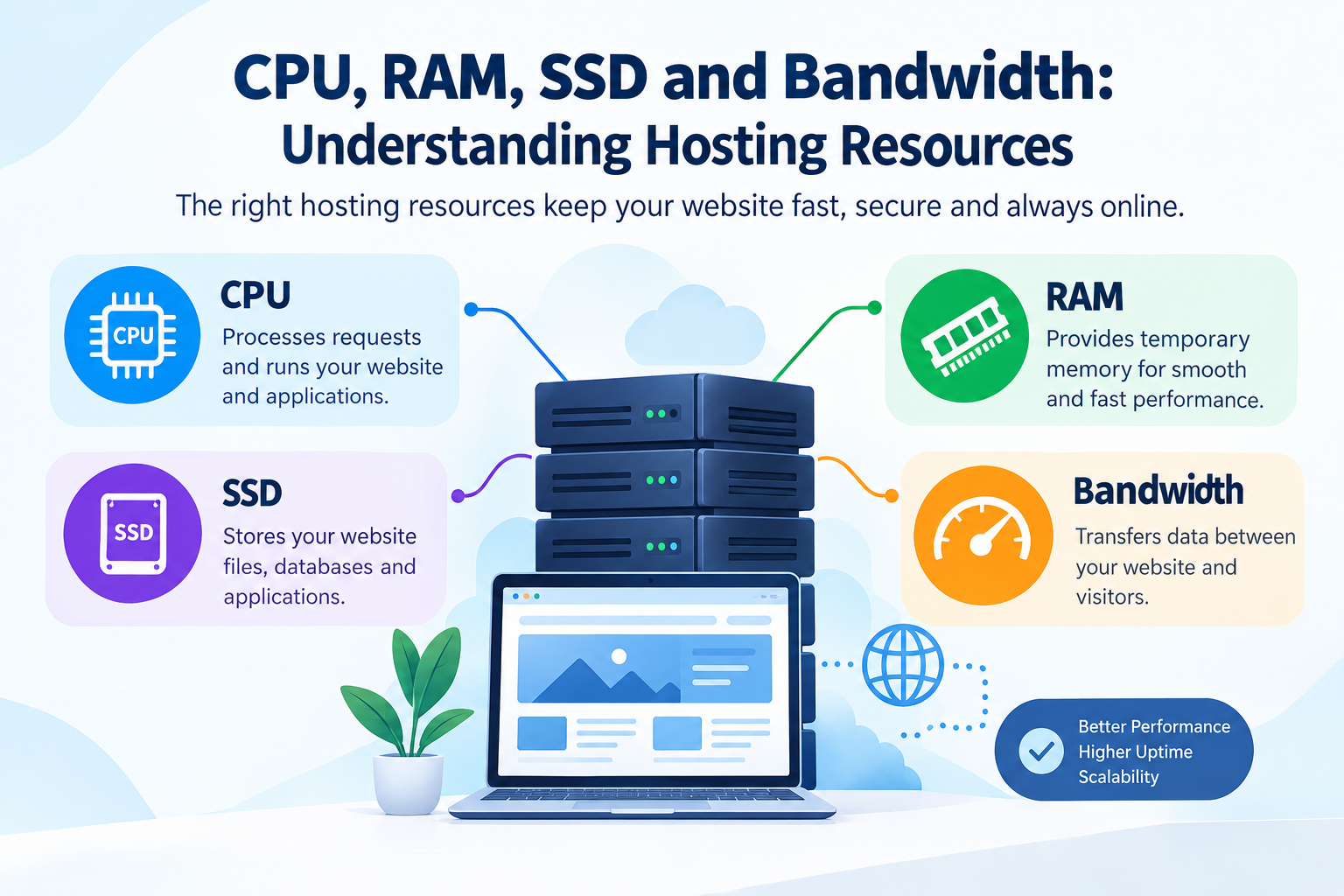
Performance depends on factors such as:
- CPU allocation
- RAM
- SSD/NVMe storage
- Network capacity
- Server configuration
- Website optimization
- Application efficiency
- Traffic levels
The difference is mainly in how the server is managed, rather than the concept of managed hosting automatically being faster.
As your website grows, you can usually upgrade VPS resources or move to a more powerful hosting configuration, depending on your provider.
Which VPS Hosting Is Right for You?
The right choice depends on your technical skills, budget, website requirements, and available time.
Choose Managed VPS Hosting If:
- You don't have server administration experience.
- You want technical assistance.
- You want to spend more time focusing on your business.
- You manage a business or e-commerce website.
- You don't want to handle regular server maintenance.
- You prefer convenience and support.
Choose Unmanaged VPS Hosting If:
- You have strong server administration knowledge.
- You have an experienced technical team.
- You need extensive server customization.
- You want greater control over the server environment.
- You are comfortable managing security, updates, and backups.
- You want to reduce hosting costs and can handle the technical work yourself.
Managed vs Unmanaged VPS Hosting: Which One Should You Choose?
There is no single VPS solution that works for every website.
If your priority is convenience, technical support, and reduced server maintenance, managed VPS hosting may be more suitable.
If your priority is control, customization, flexibility, and lower hosting costs, unmanaged VPS hosting may be worth considering—provided you have the technical skills to manage the server.
Before choosing a plan, compare the provider's:
- VPS specifications
- CPU and RAM
- Storage type
- Bandwidth
- Backup policy
- Security features
- Technical support
- Operating system options
- Control panel
- Upgrade options
- Pricing and renewal costs
- Server location
Frequently Asked Questions
1. What is the difference between managed and unmanaged VPS hosting?
The primary difference is server management. With managed VPS hosting, the provider handles many server administration tasks. With unmanaged VPS hosting, the customer is generally responsible for managing and maintaining the server.
2. Is managed VPS hosting suitable for beginners?
Yes. Managed VPS hosting can be suitable for beginners because the provider handles many technical server-management tasks.
3. Is unmanaged VPS hosting cheaper?
Generally, unmanaged VPS hosting has a lower service cost because fewer management services are included. However, the customer needs to handle server administration.
4. Which VPS hosting is better for a business website?
It depends on the business's technical resources and requirements. Businesses without an in-house technical team may prefer managed VPS hosting, while businesses with experienced system administrators may choose unmanaged VPS hosting.
5. Can I switch from unmanaged to managed VPS hosting?
In many cases, yes. Some hosting providers offer managed services or migration options, but availability depends on the provider and hosting plan.
6. Does managed VPS hosting include backups?
Not necessarily. Backup services vary between providers and plans. Always check the backup frequency, retention period, storage, and restoration policy before purchasing.
7. Do I need technical knowledge for an unmanaged VPS?
Yes. Unmanaged VPS hosting generally requires knowledge of server administration, operating systems, security, software installation, networking, and troubleshooting.
Conclusion
Understanding the difference between managed vs unmanaged VPS hosting can help you choose a hosting solution that matches your technical skills, budget, and website requirements.
Managed VPS hosting focuses on convenience, support, and reduced server administration, while unmanaged VPS hosting provides greater control, customization, and responsibility.
Before making a decision, don't compare hosting plans based only on price. Consider the amount of technical work involved, the support available, security requirements, scalability, and the time your team can dedicate to server management.
The right VPS hosting environment is one that provides the resources and level of management your website actually needs.
























































































































































































Leave A Comment