

How To Use Domain Name Parking To Hold A Name Safely
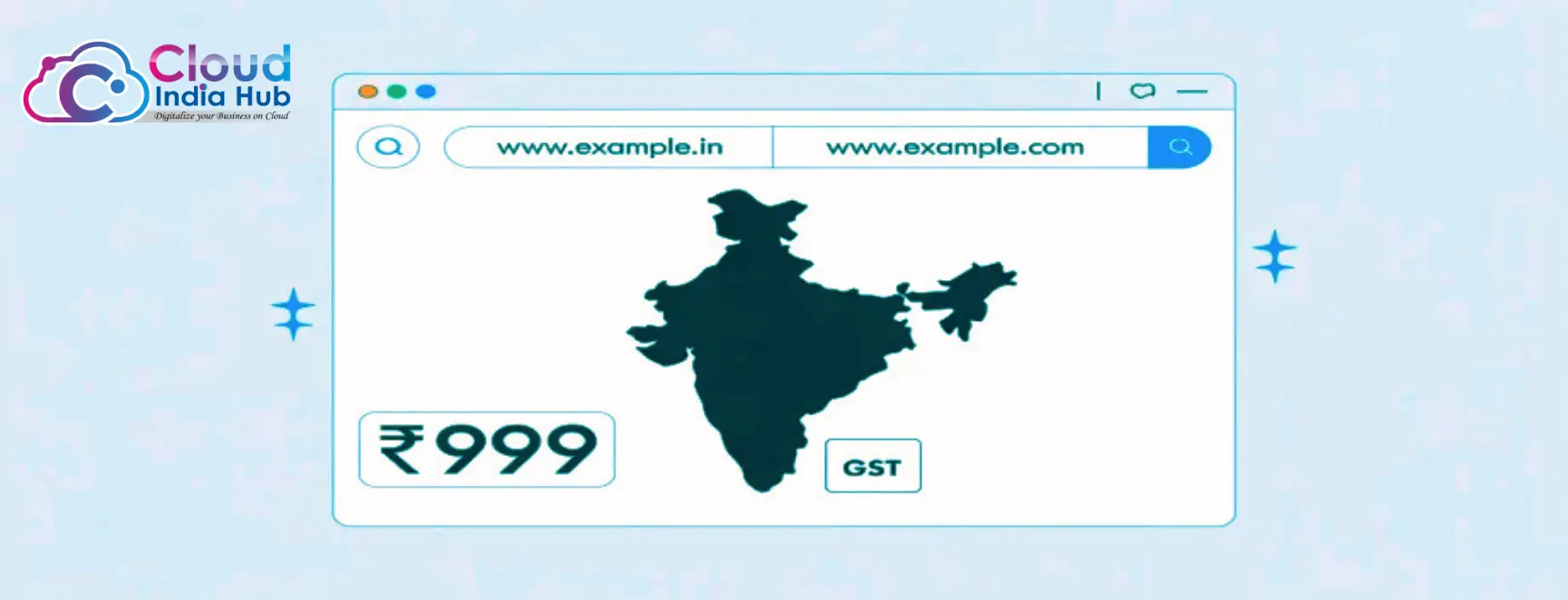
Domain name parking means registering a name and holding it without a full website. On Cloud India Hub, a .co.in is listed at ₹599 and a .in at ₹649 before GST, so you can reserve a brand name now and build the site later.
Parked names still expire, so start by learning how a domain expiration checker protects your renewal dates. This guide covers what a parked page shows, what holding a name costs, how to buy a name someone else parked, and how to park yours without risk.
At A Glance
• Price: .co.in ₹599, .in ₹649 and .com ₹1,175, listed before GST
• Transfer time: 5 to 7 business days
• Support: 24x7 chat
• Main risk: ICANN found 5.5 percent of sampled parked pages showed potential for harm.
What Does A Parked Domain Actually Show Visitors?
A parked domain shows a placeholder instead of a working site. Domain name parking can display a coming soon notice, a for sale banner, a few ads, or nothing at all, depending on who controls the name server settings.
ICANN’s research team describes parked pages as ranging from a few advertisements to a for sale notice to a note that the name is suspended.
The page also tells you something about the owner. A contact form or a for sale link usually means the name can be bought. A blank page tells you very little, so do not assume the name is abandoned.
Control panels use the word differently. In cPanel, a “parked” domain has historically meant an alias that shows the same site as another domain. Check which meaning your provider uses before you follow any guide.
Why Do Owners Choose Domain Parking Over A Quick Website?
Owners choose domain name parking to secure a name before they are ready to build. A reserved name stops a competitor from registering it first, so you can finish branding and content without a rush.
Domain parking also keeps your options open. You can build on the name, redirect it, sell it or transfer it later.
Common reasons include:
• Brand protection: hold the .in, .co.in and .com versions of one brand
• Future projects: reserve the name of a product that launches next year
• Typo cover: register common misspellings and send them to your main site
• Resale: hold a name you expect to sell, though demand is never guaranteed
Reserving a name is not the same as owning a business. A name with no site earns no trust, so treat parking as a short bridge and not a permanent home.
How Does Parking Differ From A Redirect Or A Coming Soon Page?
A parked page is a placeholder served for a name you are not using. A redirect forwards visitors to another address, and a coming soon page is a real page you design and host yourself. Each one suits a different stage of a launch.
|
Option |
What visitors see |
Hosting needed |
Best for |
|
Parked placeholder |
A generic holding page |
No |
Reserving a name quietly |
|
Redirect |
Your main website |
No |
Spare extensions and typo names |
|
Coming soon page |
A page you design |
Yes |
Building an audience before launch |
|
Live website |
Your full site |
Yes |
Selling or publishing |
Most owners combine them. Park the spare names, redirect the typo versions to the main site, and publish a coming soon page on the main name once the branding is final.
The mistake to avoid is leaving a name parked for years with no plan. Set a review date, and decide then whether to build, redirect or release it.
How Much Does Cheap Domain Parking Cost In India?
Domain name parking costs the registration fee plus each renewal, because a parked name needs no hosting. Cheap domain parking means choosing a low listed extension and renewing on time.
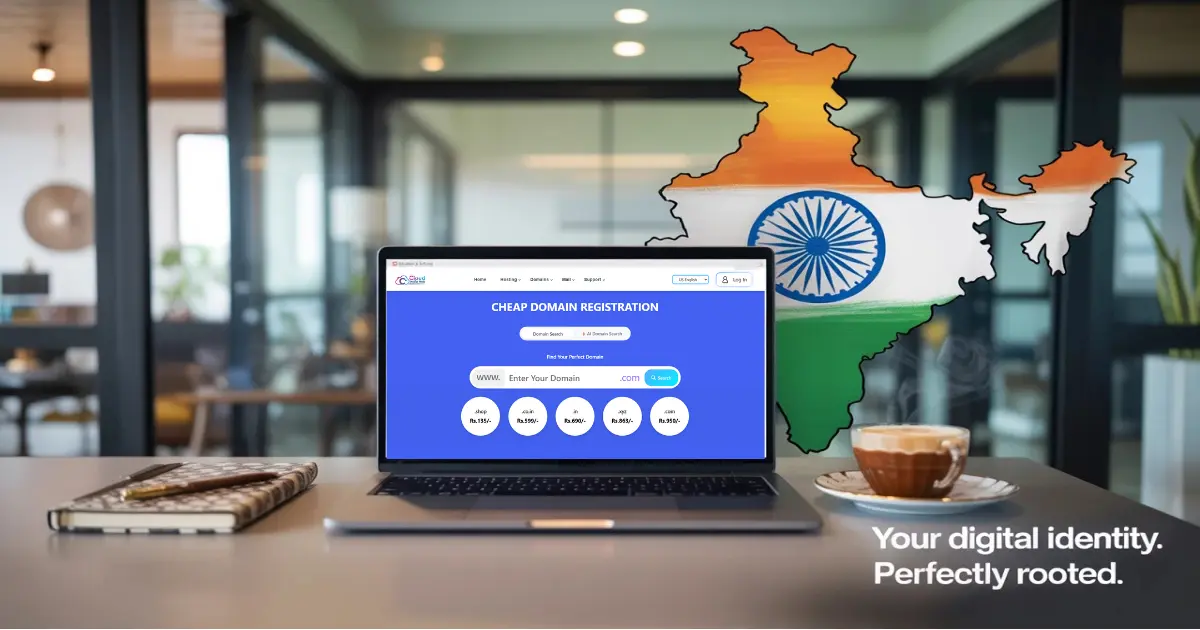
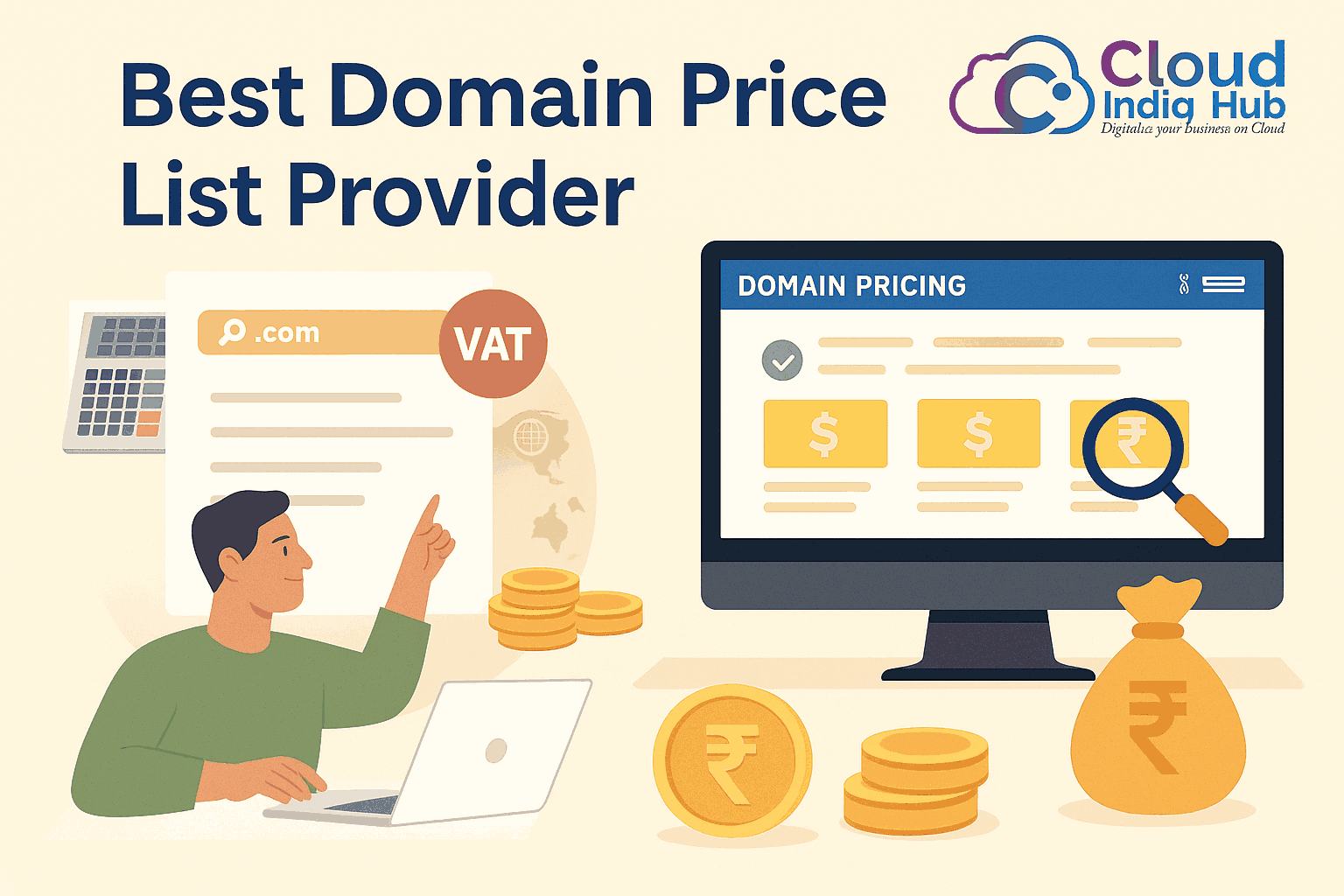
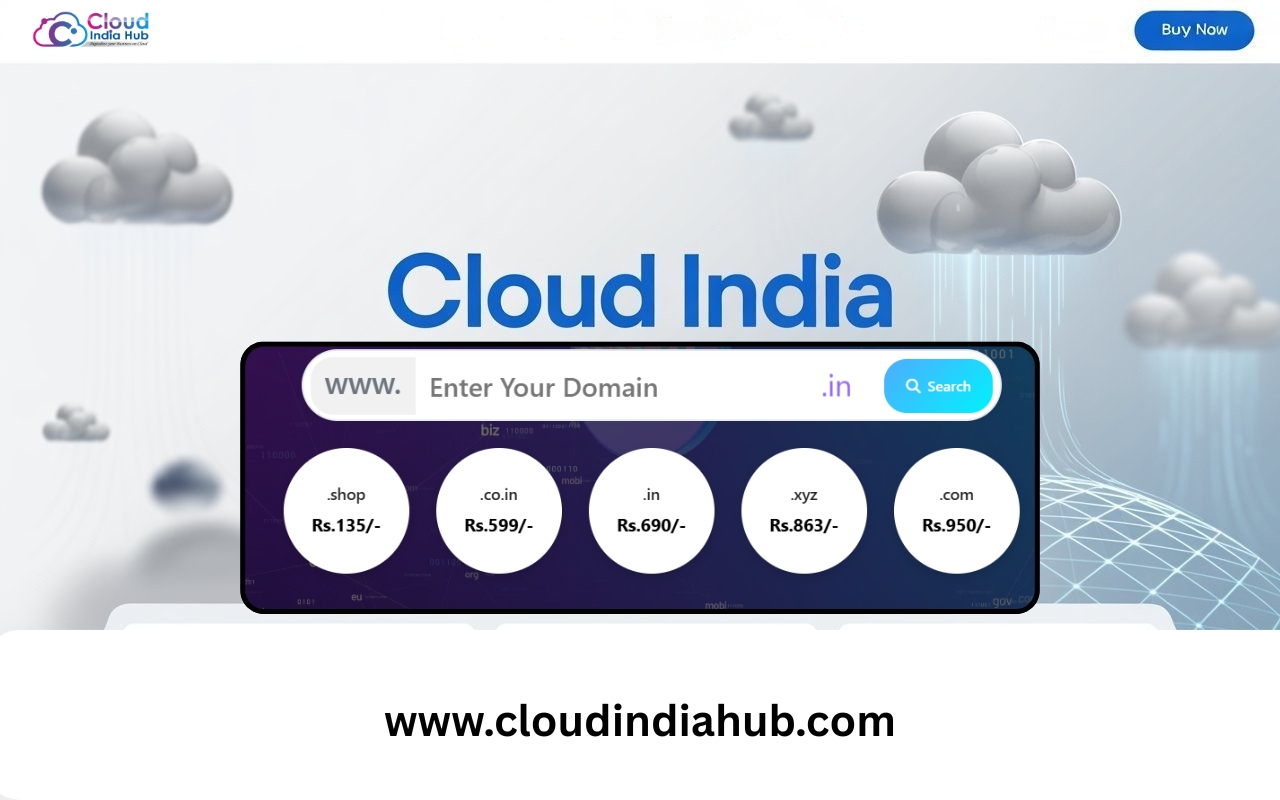
The Cloud India Hub homepage lists .co.in at ₹599 and .in at ₹649, with prices shown before GST.
The extension drives the bill. This table compares five listed prices from the homepage.
|
Extension |
Listed price (before GST) |
Best for |
Watch out for |
|
.co.in |
₹599 |
Indian startups holding a name |
Fewer people recognise it than .in |
|
.in |
₹649 |
Businesses selling in India |
Confirm the renewal rate |
|
.xyz |
₹863 |
Low budget side projects |
Less trusted by some visitors |
|
.com |
₹1,175 |
Brands that may go global |
Popular names are often taken |
|
.online |
₹2,492 |
Online stores and services |
Higher cost to hold |
Parking needs no hosting, but you will want it later. When you are ready to build, compare the Cloud India Hub web hosting plans, where the Starter plan is listed from ₹239 a month on a 1 year term, plus GST.
Is Parking A Domain Safe, And Does It Affect SEO?
Parking is safe when you control the name server settings and show a clean holding page. Domain name parking does not build search value, because a placeholder gives search engines almost no content to rank.
The larger risk is who controls the page. ICANN’s 2026 research found that zero-click redirection is common among parked domains. In its random sample, 5.5 percent showed some potential for harm, according to ICANN’s parked domain research.
Reduce your exposure with these habits:
• Control your DNS: keep the name servers with a provider you trust
• Avoid ad networks you cannot vet: unknown brokers can redirect visitors anywhere
• Skip trademarked words: a name that copies someone’s brand invites disputes
• Check the page yourself: visit the name on your phone and on a laptop
Test your holding page like any other page. Open it over HTTPS, confirm that no pop ups appear, and look again after every DNS change. A holding page you never visit is a page you cannot vouch for.
How Do You Buy A Parked Domain From Its Owner?
To buy parked domain names, first confirm who owns the name, then contact the owner or wait for a release. A parked page does not mean the name is available, and a privacy service may hide the owner’s details.
Start by reading the registration record. Look for the registrar, the status, and the expiry date. If the page shows a for sale notice, use the contact route it gives.
If the owner does not reply, a backorder can attempt to register the name once it is released. Our domain backordering guide explains the lifecycle and what to compare.
Before you pay, ask the owner four questions:
• Who is the current registrar? You need this to plan the transfer.
• Is the name unlocked? A locked name cannot move until the owner releases it.
• What is included? Confirm whether email, a site or social handles come with it.
• How will payment work? Pick a route that protects both sides.
Treat any quoted price as a starting offer. A seller who refuses to put the terms in writing is a warning sign, so walk away and keep your backup name ready.
How Does Domain Name Parking Work In Five Safe Steps?
Follow five steps to start domain name parking: check the record, register the name, lock it, set a clean holding page, then switch on auto-renew. The whole routine takes less than an hour for one name.
Each step is small, but skipping one can cost you the name. The order matters because the lock and the DNS settings protect the name before anyone sees the page.
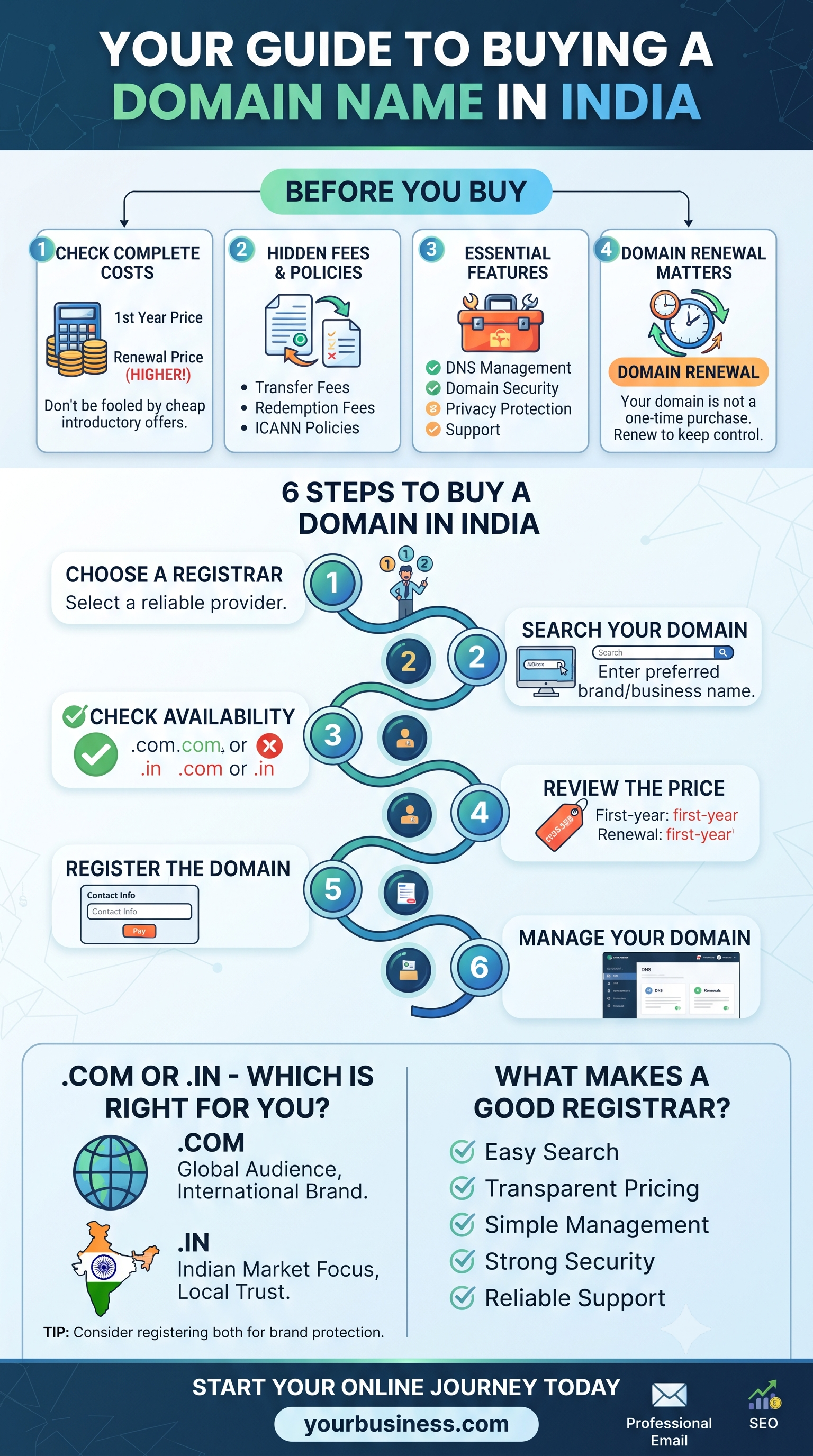
1. Check the name. Run the WHOIS lookup tool to see whether anyone already holds it.
2. Register the extension you need. Pick .in, .co.in or .com, and read the renewal rate before you pay.
3. Lock the name. Domain locking blocks unauthorised transfers while the name sits idle.
4. Set a clean holding page. Use your own DNS records, or redirect the name to your main site.
5. Turn on auto-renew. Add a calendar alert for 30 days before expiry as a backup.
The Cloud India Hub homepage lists free DNS management, domain locking and domain redirects among its tools, so steps 3 and 4 need no extra purchase.
If you hold several names, give each its own calendar entry. One shared reminder is easy to miss, and a single lapsed name can undo the work of the other four.
Can You Move A Parked Domain To Another Registrar Later?
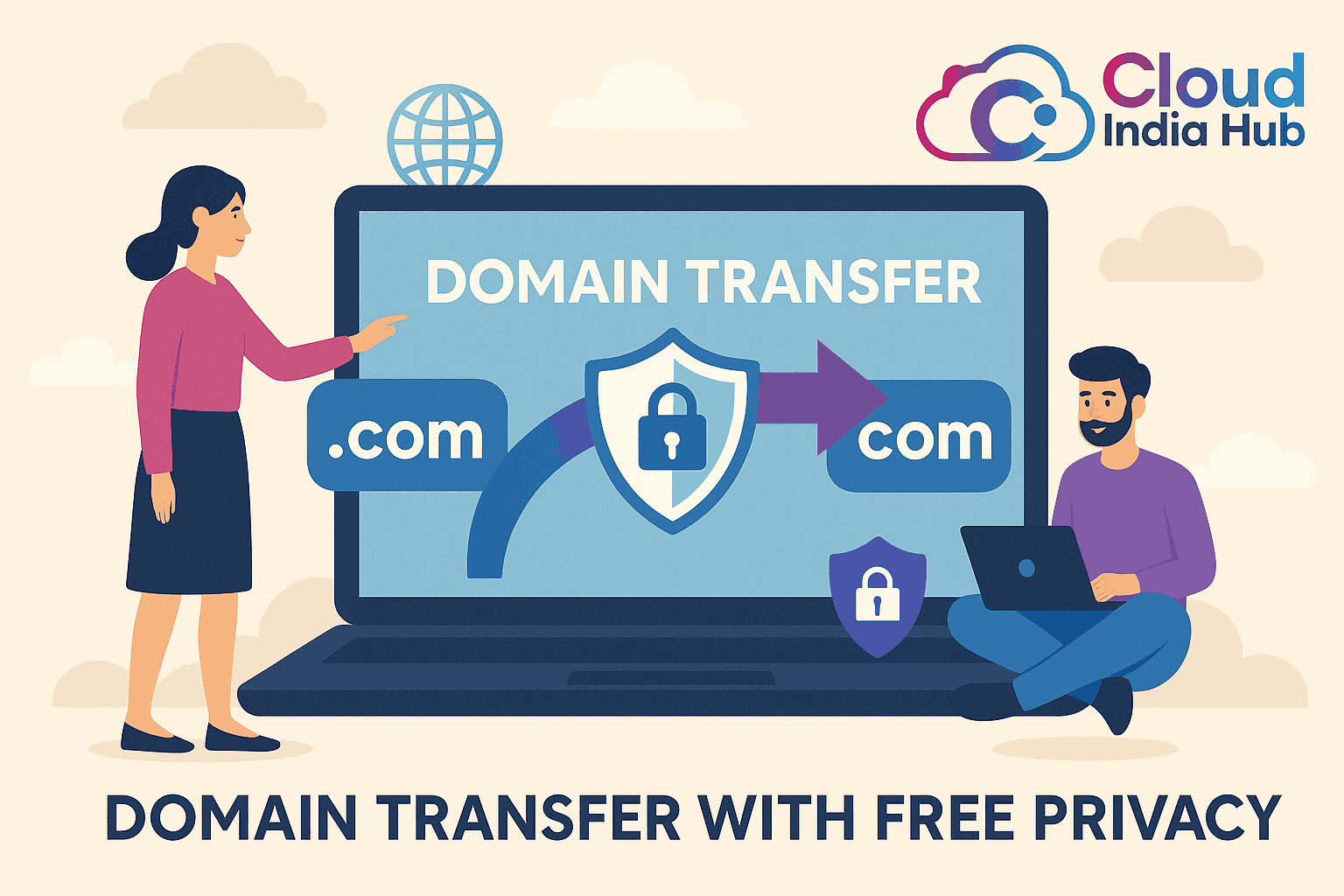
Yes, you can transfer a parked domain once it is unlocked and you hold its authorisation code. The Cloud India Hub transfer form says transfers typically complete within 5 to 7 business days.
Never start a transfer in the final week before expiry. A delay near expiry could leave the name lapsed, and fixing that costs time.
Use the domain transfer page when you are ready. Keep the old registrar account active until the new one confirms the move.
After the move, check that your DNS records, redirects and lock settings survived. Then read the new renewal rate and set a fresh reminder, because the expiry date may change with the transfer.
Frequently Asked Questions
Is domain parking the same as domain forwarding?
No. Parking holds a name on a placeholder page, while forwarding sends visitors to another address, though many owners park a spare name and forward it to their main site.
Can you earn money from a parked domain?
Sometimes, because ad networks can pay for clicks. Income depends on traffic and unvetted networks add risk, so domain name parking for a brand name is usually about protection.
How long can you keep a domain parked?
As long as you renew it. A parked name expires on its date like any other, so keep auto-renew on and your contact email current.
Can you buy parked domain names that show a for sale page?
Often yes. Use the contact route on the page, check the registration record first, and agree the transfer steps in writing before you pay.
Does a parked domain need hosting?
No. A parked name needs only DNS settings that point to a holding page, and you need hosting when you build the site, where the Standard plan lists a free domain for the first year.
What happens if a parked domain expires?
It moves through grace and redemption stages, and the owner may pay extra to restore it. After release, anyone can register it, so renew early.
How Do You Get Started With Your First Parked Name?
Search for the name you want, register it, then keep it safe with the five steps above. When you are ready to choose between extensions, talk to the Cloud India Hub team on 24x7 chat or call +91 98864 66777, and ask about domain name parking for your brand.
Expert advice
|
Domain name parking lets you hold a brand name before your website is ready. Learn what a parked page shows, what it costs in rupees, how to buy a name someone else parked, and how to avoid the risks. |
Serving Bengaluru, Karnataka.






































































































































































Leave A Comment